
How Homelessness Gave Birth To A Global Movement With Perry Knoppert
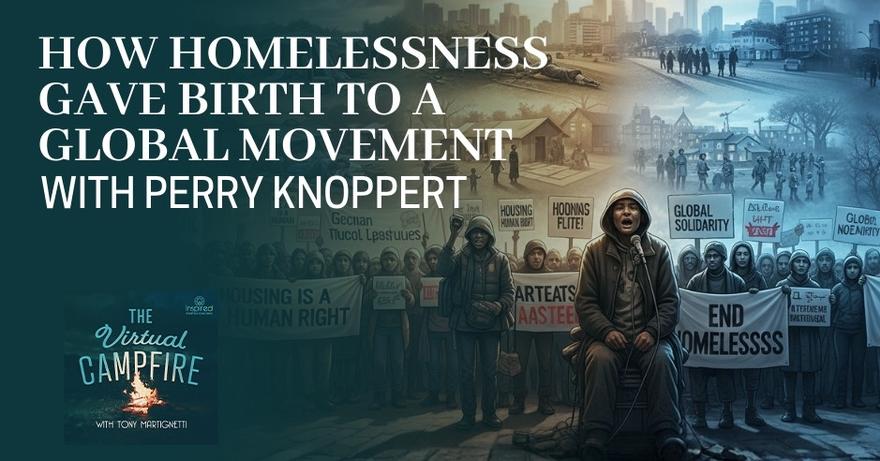
Hitting rock bottom should not be taken as a sign to give everything up, but as a catalyst to jump back stronger, bolder, and more empowered than ever. Tony Martignetti sits down with Perry Knoppert, who turned the lowest moment of his life into an inspiration to create a powerful global movement. He shares how months of homelessness pushed him to build The Octopus Movement, a community of over 11,000 “curious misfits” designed to champion human intelligence and the atypical mind. Discover how “Dr. Octopus” embraced non-linear thinking to keep his authentic self intact despite the rapid change of the world around him.
---
Listen to the podcast here
How Homelessness Gave Birth To A Global Movement With Perry Knoppert
It is truly a pleasure to introduce you to my guest, Perry Knoppert. Perry is a Dutch Creative Rebel, Founder of The Octopus Movement, a global coalition of non-linear thinkers challenging the status quo. He's on a mission to celebrate the power of the atypical mind and create systems where multi-dimensional humans can thrive. He is known as Dr. Octopus. Perry builds platforms, tools, and communities that blend human intelligence, art, and innovation. From startup to homelessness to global influence, his path defies convention, and that's exactly the point. I am truly honored to welcome you to the show, Perry.
Thank you, Tony. I love these introductions.
Yes, we’ve got to love these introductions and it's funny when I was introducing you, like Dr. Octopus, it's like everyone is thinking about Spider-Man.
That’s the laws of thought. We hear something and we make the connection immediately. Dr. Octopus was a villain. He’s also good. I’m not very good at Spider-Man, so I don’t know. Is Dr. Octopus a good character or not? What do you know, Tony?
He had some good times and bad times. Most of the time, he was a villain, but he had some good parts to him. Let’s leave it at that.
Yeah, okay, that sets the tone.
Sometimes you need to have the villain mindset from time to time to push against the establishment.
Yeah, what is a villain?
You just reminded me just to a little side note, there's a book called Villain Marketing, and it's a brilliant book because it’s like how do you market in a different way than other than everyone else. When I read that book, I was like, “This is really interesting.” I can't remember the author's name. A short story there.
I have to tell you, Tony, that Dr. Octopus, the title, I didn’t thought about it one day and thinking, “I’m going to call myself Dr. Octopus.” Not at all. This is Howard Drakes. He’s an author in South Africa. He’s a good friend and he’s awesome. He’s very octopus-like. He’s a very non-linear creative mind. He writes beautifully and he finds language in such a beautiful way.
Every time he would say something to me or about me on LinkedIn, he would refer to me as Dr. Octopus. He did that as a joke, like “That's fine,” but I liked it. I thought, “I’m going to call myself Dr. Octopus.” My girlfriend was saying, “Really, Perry? You’re calling yourself Dr. Octopus?” It’s just for the fun of it, to be honest. I think it’s so much fun to be Dr. Octopus. Who doesn't want to be Dr. Octopus? I for me, it resonates. It’s so good to be Dr. Octopus. Here we go.
You get to embody that. There's something fun about that. You bring these names into the room and then you say like, “How do I embody being Dr. Octopus?”
I think I’m aware to do this. I have a tattoo of The Octopus Movement on my arm. I love octopi. Everything about the octopus is so interesting. I think I can call myself Dr. Octopus.
We're letting it happen. It's all happening. We’re going to get into some really fun conversation and that’s what the show is all about, starting with this whole concept of flashpoints and that’s what I’m excited to explore because you've had a very interesting journey. I think sharing that would be really fun to explore. We're going to do that through flashpoints. Flashpoints are the points in your journey that have ignited your gifts into the world. In a moment, I’ll turn it over to you to share what you're called to share and along the way we'll pause and see what shows up. Perry, let’s have you take it away and take us on a journey.
Remaining True To Yourself Despite Being Homeless
I think the big story is years ago, before I started The Octopus Movement, that was a very critical, big flashpoint in my life where I became homeless. I think that's the biggest flashpoint ever, where it was so complex to become homeless in a way. It started with curiosity. How would it be to live like that? Just that curiosity doesn't create the possibility to actually do that.
There's always been that curiosity about that and things happened in my life. I messed up, Tony, big time. I was thinking everybody was angry with me and the relationship ended, the landlord was pissed off, everything was going wrong. My old landlord wanted to kick me out of the house and I basically said, “Okay, then that's what's going to happen. I’m not going to fight this. I want to see what happens if you don't fight this. I’m not playing this game anymore.” I have three kids, so I took a decision that was impossible, basically. My ex-wife wanted to kill me, I don't blame her, like, “I’m homeless now. What?”
It changed everything. It’s always so easy to say that it changed everything, and then it sounds like you did it on purpose. It wasn't on purpose. It just happened and there were decisions that made me do this. Now it always sounds so beautiful, like a sacrifice and coming to a space that is more interesting and that serves you well.
No, it didn't look like that at all. It was horrible, it was painful, it was embarrassing, it was everything. It changed everything. I was homeless for seven months. It made me realize so many things, and one of the biggest things was that nothing really changed inside of me. For me, I stayed who I was and the whole world around me changed. Also, the people that were dear to me and close to me changed.
That law of thought where we said Dr. Octopus is a villain of Spider-Man, there's the same law of thought with homelessness. You’re homeless, you become someone that that you’re not. You’re a human being, you maybe don't want to be in that spot, that space, and people judge you tremendously and they allow themselves to judge you that way.
That's difficult, but it was a big lesson. It was a very big lesson for me, understanding I’m the same Perry. What the heck? Why are you now talking to me like that? Just because I don't have a house? That doesn't say anything about me, does it? However, it does for most people and yeah, that’s an important point in my life. Everything changed after that.
Perry, I just want to start with this is so powerful for many reasons because there's identity that you attached to. It’s like deep down, you are you still. You're still yourself. When you bring on this layer of other people seeing you as homeless or having no material abode, then what happens is people treat you differently. I think that then your identity in their minds has shifted but you are still you. I think there’s something about that which is what box are people putting you in.
From that place, it’s like it’s really important to understand what are how are people framing you up and oftentimes everyone is putting us in a box, no matter who we are. Whether it's homelessness or people treating you differently because you come from a different country, whatever it may be, we tend to judge people based on what we see on the surface and not what's inside.
Yes, and I think this is what we say. We put people in a box. I think there’s more to it than that. I think there is so much fear, there is so much addictiveness to problems that people will always use. Yes, the explanation is we’re putting people in boxes so we understand. We also see things differently because of our own difficulties in life. That makes sense. That's absolutely normal. I get it that all of a sudden, someone that is very close to you becomes homeless and that's the biggest fear in your life, to lose everything.
We are putting people in boxes, which hinders them from seeing things differently according to their own experiences in life.
I believe it’s not just being judgmental, but I think it's also a lot of fear of either coming too close to someone who's where you'd never want to be, or when you're trapped in your own life and you meet someone who’s disconnected from everything, that’s fear of freedom that you also don't want to see. Is it just putting someone in a box like he's homeless so he's a loser and go away, I don't want to talk to him or is there something else going on? I believe that so many people are, in a way, trapped in what the world and what they themselves see as an obligation to be at. That someone who has disconnected from that, that's very scary.
Every time I see a homeless person, I go to that person, I sit down. That's sometimes in a city or whatever. I get a cup of coffee and something to eat and I go to them and I sit down next to them and say, “Okay, I get it.” They don't have to explain anything to me. I get it. I get it that what's happening, that that person is also thinking, “Hello, I’m just Perry. What are you doing?” I get that. I don't film that, and I don't make selfies and that's not what it’s supposed to be about. You see that online sometimes, people doing good in the world, but that needs to be framed, that needs to be filmed.
It takes a minute, maybe two minutes to connect with someone to say, “I’ve been here. I know. How are you doing today? How’s it how’s it going today?” That's the question I always ask. “How’s it going today?” “It’s okay, it's not so bad.” My daughter was knitting hats for wintertime, a lot of them and we went to a shelter to give them to the homeless people so they're nice and warm when they're outside. What a lot of fun, how interesting. My daughter is fourteen, and so she was a bit scared in the beginning like we’re going to a shelter to see homeless people.
She said, “My dad used to be homeless as well, so I want to give that to you guys.” Of course, it’s an eclectic group of interesting, weird people, all kinds of stuff going on and a lot of difficulties. I’m thankful and so kind to her and so proud and before you knew it, everyone was wearing these knitted bonnets and having fun. “Look at mine.” It was awesome. They’re just humans.
Sharing that that story you're sharing, something about that is like that's the breaking down the fear. Not their fear, her fear, through connection and being willing to say like, “Look, they're humans just like I am and I have no fear of being affiliated and being in community with these people because they’re humans just like I am. Through this, I get the gift of learning who they are, what they’re all about and knowing that they're just like I am.”
In a way, yeah. It’s also that sometimes people just need help. I get sick and tired of that story of, “No, we shouldn't feed them. We should teach them how to fish.” You know that one. No, sometimes people just need help. Sometimes people just need an arm and someone saying, “You’re doing a good job. It’s going to be okay. Are you hungry? Let me buy you some something to eat.” Sometimes we just need that.

The amounts of advice that I got, I’m not stupid. I was homeless and people would come to me, “You know what you should do? You should find a job.” They were deadly serious in their advice. I was always laughing, I said, “Really? I haven't thought about that for a second. That's interesting.” Maybe they mean well, but I don't know if they really mean well.
Yeah, it’s almost patronizing.
It is. Why are we not asking questions? Of course we judge. We all judge. We all do that. I think it’s what happens after the judgment. I can see someone and think, “That's loud. That is a lot. That is annoying.” I judge. I observe. Maybe my observing someone is not positive. You can decide, “I will park this here and I'm going to have a conversation with that person.” Not based on what I just parked to find the different way of looking at it. No, I’m going to have a sincere conversation with that person. Maybe I’m wrong, maybe I’m right. What’s going on that we're not asking any questions? It’s so simple.
I think oftentimes, we get stuck into this pattern. Maybe it's self-centered, we're in our own world and we feel as though it’s safer in here as opposed to extending ourselves out to other people.
Sometimes I think that we're trained at school and at our work environment that it's not okay to make mistakes. It’s a cliché, but it's true. I think you’re not allowed to make mistakes at school, you're not allowed to work together with others. You need to do it yourself and you need to do it exactly what is expected from you. If you’re not allowed to make mistakes, what do you do when you get annoyed by someone?
You don't want to make mistakes so you just ignore that person, you walk away and you’re not conditioned in asking questions and discover what's really going on. I think we’re missing out on a huge opportunity there if we don't do that. Who am I to say that? I just had that conversation for myself that I wanted to explore what it is to disconnect and to open up and to see what is really possible.
Keeping Your Authentic Self Intact No Matter What
Through that, you've learned so much wisdom of how people socially interact but also how that made you feel, so the emotional impact that you had, how it impacted you emotionally. Luckily, you’re strong and you’re able to make your way out of that situation and do something with it.
To be honest, Tony, I still don't know what I’m doing. The one thing that changed everything after creating that insight and thinking about what happened, I took the decision not to convince anyone anymore because when you’re in that state of mind where you disconnect from everything, you start to think about your own life, like, “Okay, I was 45. What the heck, Perry?”
You think about the 45 years and I was already divorced and had 3 kids and I traveled the world and things worked out, things didn't work out. I had made mistakes, I had success, I had failure, everything. I realized that convincing someone would always cause some boomerang effect in a negative way, that at some point it would always circle back and slap you in the face. It would always like, “Yes, but.”
If I need to convince you, Tony, to be in The Octopus Movement, but you don't really want to be there but you really liked my story and you’re thinking, “Yeah, interesting. I need to check it out, I’m not sure,” and then I say, “Tony, you should really do this,” and then as soon as something happens there that you don't like, you blame me because I’m the one who convinced you. You took the decision to do that. No, it's always the other. You blame it on me.
I thought, “This doesn't work for me anymore. I don't want to do that.” I can be very passionate about sharing how I see or how I feel about something, but that's it. I think in combination with that experience, that changed a lot. Someone asked me about being your authentic self and how much can you be your authentic self and how much time and when and when are you not your authentic self? I think I can say that I'm now 100% my authentic self. It's because of that. I don't want to convince anyone so it's me. I’m curious, I want to know who you are. That’s it. You like it or not. If I keep thinking if someone is not happy with me, where were you when I was homeless?
It takes a lot of courage, but also a lot of experiences to get there. I think a lot of us who have been on interesting journeys have lived a lot. We come to this realization that it's not our job to make everyone happy or to make people like us. What it is, is for us to be ourselves and to be truly showing up as authentic.
It's a bit of a buzz, “Your authentic self.” What is your authentic self? It doesn't even exist because my authentic self is never something that I can realize myself. Maybe only someone else can say that I’m my authentic self that makes me who I am because I cannot observe myself because the only angle that I have is my own angle.
I think being your authentic self means that you remove fear. There’s no fear and you don't try to convince people and you allow things to be as they are. Maybe that’s being your authentic self. I think there’s too much focus on creating your authentic self. “Who are you?” It doesn't matter who you are. You’re nothing. You’re just yourself.
Unleashing your authentic self means removing all of your fears. You do not try to convince people and simply allow things to be as they are.
It's almost like letting go of the trying. It's just more of the being and just allowing things to just unfold as they are and that's where the authenticity comes from. It’s just letting go.
I think so. That's difficult in today’s world. I don't think it's very easy to let go of things and to just say, “Okay, I’m letting go of everything and I will see what happens. As long as I’m honest and kind to others, it's fine. As long as I don't hurt anyone by being myself, then let’s see where this goes.” I think it’s very difficult for people to do that.
How The Octopus Movement Came To Be
We really went deep quick into this space and I want to take a quick pivot into a different direction just to say here you've had a wild ride into homelessness, then what happened after this experience that got you into creating the movement and doing the work you're doing now? Take us on the next big flashpoint moment.
It's sitting behind my desk. I got the help of a good friend, I was able to rent a house, see my kids like, “Okay, I’m back in a house, I can see my kids again. I’ve done this.” The realization came, I survived. There was really nothing, also no support from the government, no support from organizations, nothing. I survived. Okay, now what? If you survive this, that means you can do anything you want, basically, because there’s no fear in losing everything because it’s bad, but it’s not that bad. It doesn't kill you. You will stay the same even though people will see you differently. You will not lose yourself when you lose everything. That made me realize I want to do something cool.
Before that, during my homelessness, I applied for so many jobs. Nobody even wanted to talk to me and nobody took notice of my resume, nothing. I kept thinking we're missing out on an opportunity if we don't start to look at people that are slightly different. I get it. My resume is a mess. I’ve done everything. I’m not a marketing specialist. I’m not a whatever specialist. I thought this is weird. We need to be exactly as the world is expecting us to be, then we pretend to be that even more otherwise, we’re not there, and then we get the job and then we work our asses off.
We are missing out on a lot of opportunities if we do not start to look at people who are slightly different from the rest.
It's a big question mark if that's a lot of fun but at least we have the big house, the Mercedes-Benz and maybe a swimming pool in the garden. I kept thinking about all these beautiful people that I’ve met and I was already interviewing people that are different. What about I create a non-profit that helps to bring the attention to the people that are slightly different in whatever way, in whatever circumstances, in whatever different may be?
I hear a lot that The Octopus Movement is very much linked to neurodiversity. Yes and no. A lot of people with neurodiversity are in the movement because they’re weird and they don't fit in the box and for us being weird is a compliment. We're not a neurodiversity movement. It's not about that. It's about human intelligence. It's about us being ourselves, it's also about non-linear thinking, one of my favorite topics. Guess what, every human being is a non-linear thinker. We’ve created the world in a linear system and that's how we operate.
I started with 50 people that I’ve interviewed already, was very bad at it and just online talking with people. “What do you do? Why are you different?” Etc. That was several years ago and so we started with 50 people and now we have more than 11,000 people in 132 countries all linked together, all absolutely beautiful human beings, all slightly different with one thing in common. We're curious misfits. We’re curious and we’re slightly different in whatever definition of different it may be.
It's not about how different. It’s really about being human. I was in a group of people and I started to think about this non-profit. I was in Clubhouse, this was just after the pandemic and Clubhouse was big back then. Everybody was talking and everyone had time. It was fantastic. I was in this group and I asked a group of people, “Well, what is the symbol of a curious misfit?” I wanted to create something. Christine in London said, “I always send an octopus emoji to people if I had a fun conversation.”
I interviewed her and I knew her and she did that with me as well. I had the first conversation before the interview and she sent me an octopus afterwards. I was thinking, “Why do I get an octopus?” I ask my kids, “I get an octopus emoji, what does it mean guys? What's going on?” “Nothing, Dad. It's okay.” She said that and I said to her, “Yeah, that was fun.” Haley in South Africa said, “Have you seen the movie My Octopus Teacher?”
It's a movie about a filmmaker, a documentary maker that comes into a burnout, goes back home to South Africa to Cape Town and goes for a dive every day in the ice-cold water to make sure his mind gets quiet again, that he stops from thinking and to become himself again, to pause the system in what he was doing as a filmmaker. During the pausing of the system for him, he ran into this octopus and he saw the octopus every day and he made a documentary about the octopus. For the readers, if you haven't seen My Octopus Teacher, shame on you. Watch that movie now because it’s absolutely beautiful.
When I saw that movie, I thought, “Yeah, I'm going to call this The Octopus Movement. It resonates with me.” I had no idea about the octopus. Eight arms, that's all I knew. Now I have all these books about octopuses. I have some connections with scientists that know everything about the octopus. I came to the conclusion that I couldn't have selected a better symbol than the octopus for The Octopus Movement because this creature is amazing. It’s like us, we're amazing and this creature is amazing too.
I think I was so lucky with this because it resonated for so many people just to see the octopus and in the beginning I had people joining The Octopus Movement saying, “I don't know what I'm doing here, but it feels good. I think I need to be here.” That's very non-linear. That was for me a huge compliment. The rest is history. No, that’s ridiculous. That's years of hard working and a lot of fun and meeting so many interesting people and creating a board of founding members, Tony. It’s an inner family of remarkable people that understand what we're doing and that it resonates with them and they did a one-time donation to be in this group. It's awesome.
What Makes A Good And Effective Community
Truly, it is. I think one of the things that I'm that's coming through, first of all, around the idea of an octopus and nature inspires us in in many ways, which is wonderful. Also, when you really get beyond the metaphor of the octopus, the community itself is really beautiful because there's a divergent of mind divergent minds, meaning that people think differently, but people come together at the heart. They care about each other and they want to help each other. I think what makes a good community work is when people are not the same but they feel a great sense of affinity to it.
You can’t organize that, Tony. This is the big thing. This is the biggest thing ever. You can’t organize that. When people come to me, sometimes, I do some consultancy for communities in how to set up a community. I always ask them, “How do you do it?” And it’s always the same, by not doing it. If your purpose is creating a community, then don't create a community, please, because it will not work.
I think why The Octopus Movement works so good is because we’re not doing anything. It's almost happening from itself, how people are connecting. Of course we can always improve, we can always be better. I think in essence, and that's with every community, it is a community based on the people. It can never be based on an individual or a belief or a structure or rules. It doesn't work that way. The only way to make a s a community successful is when it happens almost by itself.
There are some people who would argue otherwise and they'll say like, “We need to have that strong structure and all this,” but I think that this particular community and the right types of communities where people feel a great sense of affinity to it is because of the fact that they feel like they are helping to shape the community, that they feel ownership of it. I think that is where the power lies, is the free-form nature of being in a community and knowing that I have a voice.
I’ve seen communities grow very fast. Who am I? My community only has 11,000 people. It's not very big. I see communities of 1 million or 100,000 people. That kind of community sometimes rise fast and go down very fast as well and where there's a structure that is so clear and so well organized that it almost feels like there's no content. The content is the structure and that's not a good thing, in my opinion. I’m doing this to create the possibility for people to be who they are and to show that we're missing out on something awesome if you don't look at people that are slightly different. That needs to be the focus. It cannot be any other way, in my opinion.
I just want to reflect back on this because this is one of the things that I really enjoy in these conversations, this connection point. You look back to your story that we started with, which was being homeless and in having this sense of getting to know other people who were homeless and how they were perceived and all. Now you just created a movement well, not just you've created a movement that is really giving space to that very thing.
That is to say don't judge people based on what you see initially. Allow yourself to explore, be curious. Allow yourself to be open to the people around you and through that, you actually get the biggest gift of all, a sense of connection that you wouldn't normally have. It’s almost like your homelessness, being homeless was actually the gateway for your true gift of giving people a place to belong just as they are.
That means that I needed to become homeless to really do what I wanted to do. That and that's a weird thought. I think it's true for a lot of people is to be really who you are. It’s a good thing to let go of a lot of things. I’m not saying you all should be homeless, not at all, but it's good to disconnect, maybe.
To live your life, have experiences, get on the edge of what you think is expected of you because ultimately, it's those edge experiences that actually bring true wisdom to the work. I think that's where a lot of people feel that they've learned the most is on the edge of their comfort zone, if you will.
I think from the thousands of people that I’ve met, the most beautiful ones are the ones that had the most hardship. The people with a very easy life are not always the most beautiful ones. Maybe I can even say it in a very Dutch way, when life is easy, it doesn't make you very beautiful. I think a lot of people will agree with me, they all have examples in their life. Hardship isn't that bad.
What’s In The Horizon For The Octopus Movement
We've talked about a lot of things, we've covered a lot of ground. And I think about where we are now in the world and what's on the horizon. When you think about what you've created in this community and what you think the world needs most, where do you think this community can help the most in terms of in the world? In other words, what do you think the world needs most right now?
I think human intelligence is not just a word but it's something that is really important. I don't know what the world needs right now. I know what's there. I know that we're missing out on a lot what we're not seeing. I think there is a lot of human wisdom that we're not seeing because if you don't have the million plus followers or whatever rules we have in 's world. It used to be like this. If you would not have an MBA and an Ivy League university, then going into business, that was difficult.
A lot has changed right now. I think human intelligence is very interesting. I think we need non-linear thinking. Let me explain what non-linear thinking is. Non-linear thinking is not thinking. Everybody understands what linear thinking is. Linear thinking means we go from A to B to C to D. Linear thinking is what we learn at school. Linear thinking is the conditioning of our minds that is very strong with all of us all the time.
NASA did research in ‘65 during the Space Race to find the most brilliant creative minds, and they found out that 3-to-5-year-olds, 98% of them were creatively brilliant, and only 2% of the adults were creatively brilliant. We don't need to be all creatively brilliant, but we've designed the ultimate binary thinking, which is AI. The system relevance that we find so important in our lives has now been taken care of with a digital revolution of AI. I think that will change everything.
The system relevance we find so important in our lives has now been taken care of with a digital revolution of AI.
I think we will celebrate the non-linear mind, the real creativity, the not-thinking, the human intelligence, the wisdom. I think that's what’s going to be very important in today's world. Definitely because the linear solution, that's AI. We don't have to do that anymore. The binary thinking, we can do that.
To bring something really profound and intelligent into something, if it's in art, when you see a Mark Rothko painting, of course, a computer could create these colors as well and put that on canvas, but it will not create the emotion trigger that it has with a lot of people when they see a Mark Rothko. It can only be done by a human. When there’s music produced, of course AI can create awesome music that you’re listening to and like, “That’s AI.” I think that's the most important thing. It’s that human non-linear thinking, not-thinking, the space between thoughts, the intuition, the connection between humans. That is very strong.
Beautifully said. I couldn't agree more, the sense that we need to step out of that linear thinking path and know that now we've got tools. The brilliance that has brought us here is that we've got tools in place that allows us to step out of that track of thinking and now allow us to say how can we use our minds to the best of our ability, our human intelligence? I think that's really a path that will be most fruitful for all of us.
I hope so.
That's the goal. We can only speculate at this point how we'll all move together in this path. The idea is that we can plant seeds and hope that they will they will sprout in the right direction.
Also, create something beautiful together. What are the chances to be born? It’s 1 on 300 billion or something like that and then you’re here for a split second on this earth, this planet in space. Zoom out, look at the big picture. What are we doing. We should really create something beautiful together and enjoy that split second that we’re here and really make some the best out of it.
When I lived in China, above the Forbidden City in China, in Beijing, there used to be a sign, “Wu wei”, and that was the sign at the entrance of the Forbidden City for the Emperor. Now Mao Zedong came and he removed Wu wei and he put his picture there. Talking about ego. Wu wei is effortless effort. Wu wei means playing the game as beautiful as possible. Not to win the game, but to play the game beautifully.
I like that. I think that split second that we're here we should be more focused on Wu wei, not winning the game but playing the game as beautiful as possible. Are we completely out of our minds? When I see social media, now I sound like a ridiculous old dude, it's all about money and it's all about success and it’s fine. It’s fine to have success, it's fine to have money, that's not the problem. Can we play this in a way that we celebrate Wu wei and not just about winning and hurting each other, etc. We’re here just for that small second. I don’t get it.
Books That Changed Perry’s Life
I just love that you're sharing this because this is a great place for us to come to a closure on this because it’s a sentiment that is going to stay with me for sure and the readers, as to how can we embrace the Wu wei way. I love it. Perry, since we're coming to a running out of time, I have one last question for you. That is what are 1, 2, 3 or more but books that have had an impact on you and why?
This is what I like the most about everything. Sometimes you can meet one person, he or she can say something that triggers your mind and it changes your life. It can be one sentence, one remark, one smile, one observation. The best thing there is for me is connecting with other people and having these some conversations and booking. A let's have a chat. I use Pick My Brain platform for that, PickMyBrain.world and people can just book me and have a have a conversation.
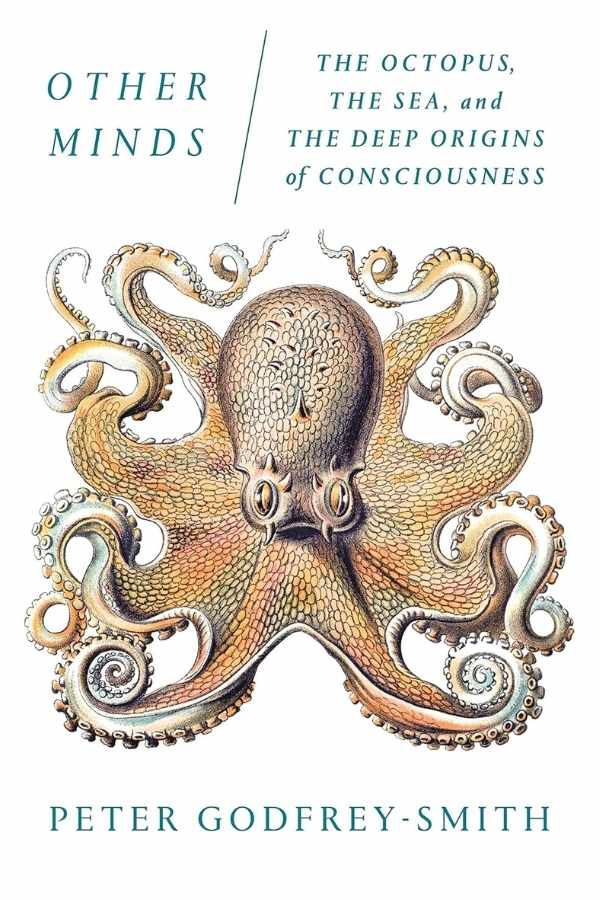
I love books. I have many books here and of course I want to share a book about the octopus with you. It’s called Other Minds by Peter Godfrey-Smith. I just started reading this book but it’s really fun. It's explaining life on earth and explaining how the octopus was developed, is developed and everything that’s going on. It’s curious. It makes me curious. I was just reading about how the octopus removed its shell and became very vulnerable but also very adaptable.
 It’s one of the oldest creatures we have. The octopus was already here before plants and trees. If I think about plants and trees then I go to another topic that I love talking about and that's the mycelium. I always call our community the human mycelium. I think in some way we’re all connected. This is not Dr. Octopus becoming woo-woo. Maybe I’m a bit woo-woo, but I always find it fascinating. I’m looking at my laptop right now, Tony, and I still feel a connection between us. I’m looking at a screen and it goes through the internet in a dark fiber-optic cable through the ocean. You're not here, but I still have a feeling you’re here. It’s that connection that I find interesting.
There’s this book Finding the Mother Tree which is so interesting in explaining the mycelium that is in the forest in how plants and trees are connected and working together to create something beautiful again. I think that same working-together creation is with us as well. In The Octopus Movement, I was wondering of course there is a lot of stuff going on in the world in politics and power and whatever your opinion is about that. I start thinking, “Why is there not a global politics way of thinking?” It’s always with countries.
Why is there not something that is beyond countries and borders? Why is it not something in politics linking all the people together like it happens in in the forest, in nature? A lot of people in the movement were like, “Yeah, we should talk about that.” It’s not the United Nations because it says already United Nations. It's still the country. When I think about this, it feels so simple thinking we’re all there, why don't we as humanity say yes to this and no to that? Why does it always need to be a country? Interesting. That's Finding the Mother Tree. It’s about the mycelium in the forest.
Get In Touch With Perry
I haven't heard of that book so that’s something that I’m anxious to check out. Wonderful. I know we’re up on time and I don’t want to keep you too long but I’ll just say, Perry, this has been an amazing conversation. Thank you for sharing all of your wisdom and your stories. This movement is powerful for many reasons and I think that it is time for us to come together and share who we are and come and do it together and find ways to make sure that we're not trying to hold back who we are. Thank you for doing what you do.
Thank you, Tony. Thank you for having me as a guest. Thank you for sharing my story with your audience. Thank you so much.
Of course, and before I let you go, I would want to make sure people know where to find out more about you and your work.
Theoctopusmovement.org. You can find all the information there. Reach out to me directly on LinkedIn, Perry Knoppert, also known as Dr. Octopus, so if you search that, you will be okay. You go to PickMyBrain.world, you can find me there as well, you can just book a twenty-minute Zoom session and we can discuss whatever you want to discuss. That's how it works.
Wonderful. Thanks again and thanks to readers for coming on this journey. I know you're leaving inspired by the stories and really looking forward to expanding how you show up in the world through this work. Thank you for showing up and looking forward to hearing your thoughts. Thank you.
Important Links
Love the show? Subscribe, rate, review, and share! https://www.ipurposepartners.com/podcast

0 comments
Leave a comment
Please log in or register to post a comment