
Inside-Out Leadership: Finding Wisdom, Connection, And Depth In The Age Of AI With Dr. Camille Preston
Ready to stop managing change and start embodying it? In this conversation, business psychologist and Aim Leadership CEO Dr. Camille Preston explores the future of leadership. As AI transforms work, Dr. Preston shows how true differentiation comes from Inside-Out Leadership—leveraging your unique human wisdom as a competitive edge. She shares insights from neuroscience, behavioral psychology, and her own journey—from supporting police chiefs on 9/11 to the spiritual inspiration behind her book Living Real. Learn how cultivating deep connections, embracing the full human experience, and prioritizing empathy can transform your leadership and your organization. For leaders ready to go beyond the surface, foster genuine community, and lead with purpose, this is a masterclass in leading in a rapidly changing world.
---
Listen to the podcast here
Inside-Out Leadership: Finding Wisdom, Connection, And Depth In The Age Of AI With Dr. Camille Preston
It is my honor to introduce my guest, Dr. Camille Preston. Camille transforms leaders from the inside out by blending neuroscience, behavioral psychology, and hard-won wisdom to spark system-level change. As a pioneering business psychologist and CEO of AIM Leadership, she doesn't just coach executives. She rewires how leaders think, feel, and act, creating ripple effects across entire organizations. Her approach begins with the individual but extends to team dynamics and organizational culture.
She's the author of Living Real, Create More Flow, and Rewired. She brings her insights to Psychology Today, Fast Company, and Thrive, while captivating audiences as a keynote speaker on virtual effectiveness and team optimization. She partners with leaders ready to stop managing change and start embodying it. I love that. She lives in Cambridge, Massachusetts, with her husband and two wonderful kids who are lobbying for a dog. Let's make that happen, my friend. I am so thrilled and honored to bring you on to the virtual stage. Welcome to the show.
Inside-Out Leadership And Differentiation In The Age of AI
Thank you. I'm excited to be here. It's funny to hear you share that introduction. First of all, thank you. It is very generous. My company is 22 years old. The thing that is crazy is that inside-out leadership has always been a passion, but it's so important now, when AI is automating everything. The thing that's going to differentiate leaders is that inside-out wisdom. Who are you? What do you know? AI is coming hot and fast for everything else.
When AI is automating everything, what will truly differentiate leaders is their inside-out wisdom—who they are and what they know. AI is coming fast for everything else.
I love that you say that. So many things about that, which lines even with the work that I'm doing, too. There's going to be a specialization that comes to what AI can do, but it's our ability to go broad and understand what it is that our uniqueness, the intersectionality of what we do, allows us to become the differentiator for what we do with AI.
AI is making the knowledge and data accessible. It's our wisdom, our human element, to be able to hold that complexity. If we play our cards right, we're using AI to optimize everything and spending more time by the actual campfire in nature with each other, having these conversations.
I love your style, my friend. That's exactly what it's all about. I'm so thrilled. We're going to have such a great conversation because we're two like-minded souls. We're going to uncover the story that has gotten you to the stage where you are, making such a huge impact. Congratulations on twenty-plus years of doing this work. That's amazing. How do we roll on the show? We uncover your journey through what's called flashpoints. Flashpoints are these moments in your journey that have ignited your gifts into the world. In a moment, I'm going to turn it over to you. You're going to share what you're called to share. We'll pause along the way and see what themes are showing up. Are you ready?
Yes. I love it.
Let's make it happen.
Flashpoint 1: Working With Police Chiefs And The Loneliness Of Leadership
It's interesting. One of my flashpoints was a career that was totally not in this space, which I'm sure you understand.
Yes.
I started working with police chiefs, police executives from large jurisdictions. My first day on the job was 9/11, which is the day their job team went from hometown security to homeland security. The flashpoint that sticks out when you say that is this. I remember the Chief of Police in Minneapolis one day said, “Camille, what are you doing for dinner tonight?” I was like, “Bob, I'm here every three weeks. It's negative 30 out. I'm hoping the cookies at the DoubleTree are warm.”
They said, “Can we have dinner?” We ended up having a conversation. He was running an organization. He was at the top. It was lonely. He wanted a strategic thought partner. He told other police chiefs in towns that I was visiting on my research. I remember my dad pulling me aside. He was like, “Honey, what are all these married police chiefs taking you out to dinner for?” I was like, “Dad, rest assured. It's not that.”
It was a flashpoint of how many people are so service-oriented, so committed to doing what's right, so sacrificial, and such a servant leader. We're craving that community. I see that even today. We have leaders saying, “I need help convening a peer group. I need that connection of executives who can be a strategic thought partner in what we're doing.” I'm sure that resonates with the work that you do, where people are craving that connection.
I love that you're saying that because there's something about that. We always look at the strong people in our lives, and the strong have to be out there, not just the frontline, but a lot of people who are serving others. We had to think about how they are being served, even ourselves. People often think of coaches and psychologists. We have to make sure we're filling our cup and getting served ourselves through community and through other people helping us to unwind and think about our emotional journey, too. Would you agree?
A hundred percent. That's actually almost perfectly aligned with what the last book was, Living Real. We often get going so hard and so fast towards what we think is success and what we think will be happiness that we narrow our conception. All of a sudden, we find ourselves with all the external metrics and accolades, but not necessarily a life that's rich, where we feel enlivened, or where we feel deeply connected to others. I feel like people are craving that gateway to start to say, “Wait a minute. What does success look like for me? What have I sacrificed to be in this space?”
We often rush toward what we think is success and happiness, narrowing our view, only to find ourselves with external accolades but without a life that feels rich, alive, or deeply connected.
That question, particularly, is one of the ones that it's so easy to put the words out in the world, but answering it is like, “How do I answer that?” We need to be asking that question more often and giving the space to answer it with intention.
They're not easy answers. They're not top of mind. They're not the tip of the tongue. A lot of times, we haven't been taught or rewarded for sitting with those questions.
The first time we're asked to make that happen, it's when we're in high school and we have no idea. What do you want to do with the rest of your life? I guess I'll do this. I have no idea what I'm going to do.
Flashpoint 2: The Unwanted Book & The Sine Wave Of Life (Living Real)
I remember I calculated. I had 26 years of formal education with a doctorate. I had 45 minutes in a senior seminar in college on “What is a good life?” If you were going to say a second flashbulb moment that changed the trajectory, it was actually this book. For anyone who has written a book will know this, but I'm sure other people have these lived experiences. It was December 8th at 4:00 in the morning. It came knocking. It was like, “Knock, knock, knock. Here's an entire book outline.”
It downloaded. Tony, I was like, “Two books, two kids, I'm out.” I rolled over. It started poking me and poking me. I was like, “Fine, I'm going to get up. I'll write it down. I'm not committing to writing it. I'll write down the outline,” but then I was like, “If I meant to do this, make the path clear. Make the path easy.” This week opened up in my schedule in January. I was like, “Should I go to the beach or should I go to the ocean? I'm going to take a week to write. I'm going to go somewhere where I can focus. Is it the snow or is it the ocean?”
I texted one of my best friends who's actually in this book. Her name is Alice in the book. I said, “You have this rental condo in Myrtle Beach. Is it available?” She said, “It's only available for one week, Q1.” It was that week. I get to Myrtle Beach, South Carolina, in January. Would you believe it snowed 13 inches for the first time in thirteen years? I was like, “I'm listening. Here's the book. Here's the snow. I'm on the ocean.”
I do think life, if you can slow down and you can put your wishes aside, the world does give you a lot of moments where you can start to see what is being called or what is being asked of you. For the audience, it wasn't a book I necessarily wanted to write. I was just called to write it. It's this idea of how our world has shallowed. We've stopped dealing with hard things. Unconsciously, by not doing the hard things, we actually block out our capacity to feel joy. If life is like a sine wave, the wave has flattened. We've shallowed our lives. We shallowed our relationships.
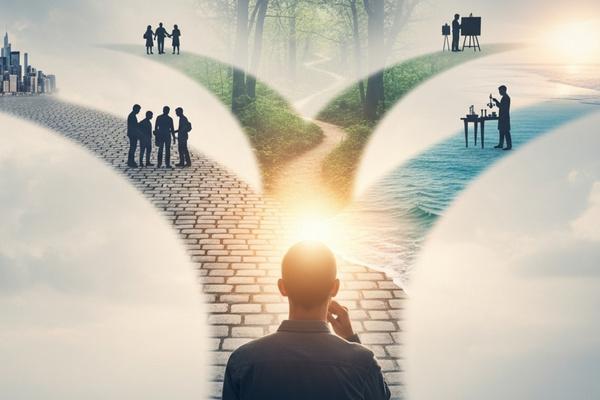
It was a book that came out of emotion, but I realize now it's almost a manifesto for where we are. We're having fewer real conversations. We're not talking about things that matter. We're not doing those hard inquiries of, “What is success?” It's so much easier to scroll TikTok and so much easier to catch up on Netflix than to be like, “What is it that's important?” It's hard work doing that.
I love how you're tapping into this. It makes me think about the autopilot we go on. It's like going through the motions and then expecting at some point you're going to wake up and say, “Why am I not where I want to be?” It is because you haven't been living your life. You've been going through motions and not thinking about what you want. I agree. That analogy of a sine wave, it's not all up. Sometimes, there's an up and down that allows you to live into it, which reminds me of this quote, if you'll allow me to share.
It's someone you know as well. His name is Peter Bregman. He is someone who has had an impact on me. “If you're willing to feel everything, you can have anything.” There's something about that, which is about emotional courage and this ability to say, “I don't want to just mute the good and the bad emotions. I want to feel them all because through that, I have a much richer life.”
When we haven't felt all the feelings, it can feel overwhelming. The book is like, “How do I start? How do I start feeling? How do I start having conversations?” I call it realing, which is exactly what your colleague is saying. For people in your audience who are tuning in, maybe you're at a point of uncertainty or fear. Maybe you've been made redundant by AI. Maybe you've a fear of being made redundant. Maybe someone you love has been made redundant.
You can feel that tension, that uncertainty, and that destabilization. It can feel so scary in the moment to feel the ground underneath you shifting. Feel it because it's almost more dangerous if you had such thick shoes that you weren't tuned into it. When you actually connect to what's shifting, you can open yourself up to possibilities. It's scary, but it's going to happen anyway, so you want to feel it.
Fear is a gateway. When you have fear, then it's allowing you to say, “Something is happening.” It allows me to do something with that. The problem is when you feel numb to that, and you don't have a sense of fear, then you continue to rinse, wash, and repeat the same old thing. That's not healthy. Tell me a little more about some of the journeys and some of the other flashpoints that you've had. You've been on this path for a while, but what other roles or challenges have you had along the way that have quite had you questioning, “Am I on the right path, or is this the right journey for me to be doing this work?” Have there been moments like that?
AI Disruption, Identity, & The Wisdom Economy
Yes. There have been a ton of moments. The one that's close in the center and that's alive in me, but also I'm sure with other folks, is watching the AI disruption right now. In many ways, everybody's calling themselves a coach, everybody and their mothers hanging out a shingle, like, “I can do that.” It's a challenge to identify what the differentiators are of who you are and what you do. It's a funny story. A client of mine was leaving BCG. She was going out on her own. She sent me an email. She said, “I'm going to be hosting a workshop on your business on July 25th at my house at this address.”
It was 2017 or maybe 2018. I'm not sure. I had this moment, Tony. I was like, “Wait a minute. You're paying me, but you're doing a workshop on my business.” I drove two and a half hours. I showed up. I remember it because it was the day before my husband's birthday. What she wanted to do was get her chops back about her consulting shops. The first thing she sat me down with was, “Stop calling yourself a bleep, bleep, bleep coach. You're so much more. You're a business psychologist.” She laid out this case. It's a reminder because it's hard to see yourself. Even if you're in the business, it takes two to see one.
You can't paint a chair when you're sitting in it. I've been thinking about that moment a lot because I see that pressure in the system again. I've been spending a lot of time thinking about what the wisdom economy is that we're entering and what it means to lead in a world where AI is everywhere. What is the human element? What is that human moat? How is it that we differentiate ourselves? How is it that we help people flourish? It's not going away. Even after doing this for years, you're always having to read the room, understand the temperature, and think about what it is, how you're navigating, and how you meet people where they are. Does that resonate?
Yes. What you shared was a masterclass in the evolution of how we evolve in this process. Even for people who have been doing this work for so long, you come to a place where you start realizing, “Who am I now? What is my identity in the place of all the disruption and all the changes in the world?” Sometimes, you do have to take a step back. I could go off for an hour about my own journey and doing this because I've been going through this process, too.
We attach ourselves to these external labels, these identities that people see us as. The reality is we contain multitudes. We have all these things that people see us as. There are many ways we need to be able to say, “How do I see all the depth of who I am when people think that the title that we hold or the title that we go out to the world with the brand is sometimes limiting?”
I'm having a moment. Who is the CEO of Salesforce?
It's Benioff.
Benioff was being interviewed. He was talking about how he came up with his business. It's beginner's mind, which is exactly what you said. With that is humility. It is not being too attached to your ego, your identity, but coming back to those questions of servant leadership, beginner mind, and what is being called forth.
The great thing about it is, especially as we get along in our careers, when you start to have all these different experiences, it allows us to say that we can still evolve into anything we want. Your next chapter could be anything. There's still time to morph into another field, into another way of showing up. This reminds me of something I always love to say. It is this transcend and include. You include the past, but you transcend to that next evolution of who you are.
Metabolizing Grief & The Depth Of Lived Experiences
I'm going to take that and weave it in. The book that I didn't want to write came out of five deaths in five months, but the first death crushed me. It was my closest family member. It was a big thing. I’ll just leave it at that. What I realized is that people didn't want to talk about hard things. After a couple of days, they're like, “Are you driving the kids to soccer?” It got back to this level. I wasn't quite ready to get there. God bless my husband. He's been such an incredible partner through this.
What I realized is that when we actually metabolize our emotions, when we are able to hold them and be with them, their discomfort, and the ugly that sometimes happens with them, we harness the wisdom of what's in that. I would love for my uncle to be here in life. He was widowed. He had no kids. He was my closest family member. In some ways, he lives inside me now, having held that grief and experienced that grief.
When we actually metabolize our emotions—when we can hold them, be with them, and even sit with the uncomfortable or ugly parts—we harness the wisdom within them.
That's all lived experiences. If you can actually experience them and be in them, the highs, the lows, and the messy in the middle, then it changes your life from three dimensions to four or five dimensions. It flushes it out. The risk factor is that with everything automated, super sexy, fast, and digital, we risk losing that here in the now, the present, the texture, and the richness in there. You're leaning in, so I can tell this resonates.
When you think about where we are now, you're absolutely right. I also worry about it because there are a lot of people, especially younger generations, who are not getting that type of experience, the depth of relationships that most of us have had. We've lived in a world when that didn't exist, when we didn't have the digital world quite like it is now. We know what we miss when we don't get together in real life and experience hugs and all those things that happen. You realize the connection that you have built.
When you lose someone you love, and maybe you didn't get a chance to say goodbye or didn't have the chance to honor that connection, you do feel like something is missing. That dimension of yourself is gone. We do need to find a way to bring deeper connections in the world. It all comes back to what we started with when we talk about living real. Instead of one flat line, we deepen it so that we get to a life that is full of more joy and also more depth.
The Epidemic Of Loneliness & The Power Of Micro Connections
You're pulling threads. You're so spot on. One in five adults feels lonely on a daily basis. It's the equivalent of smoking fifteen cigarettes. That's what it does to your health. We know loneliness is a huge thing, yet I'm seeing people not sure how to reach across the aisle, reach out to the neighbor, and start those conversations. The book has a lot of tactical ideas on that because you're right. It is those connections. It's that time, the felt time.
I had an interesting moment. Anyone who knows me knows I'm super quirky. I'm usually up at 3:30 or 4:00. I wrote my dissertation early in the morning. God bless my husband. He is very patient. I'm usually in the local grocery store as soon as it opens. I pick up whatever I need. It's close by. It was interesting. I was at my daughter's music concert. I looked at this woman. I was like, “She looks so familiar.” You know when you know someone, and there's no connection?
You're like, “I got to reboot the brain.” She said, “Camille, you come in every morning. You always smile. You always say hello.” She was the cashier at the grocery store. It was this moment of, “You never know who you're going to be with.” I realized that, sometimes, those connections don't have to be pouring your heart out over a bottle of wine, sharing. It's the little micro moments that actually can add up to more fulfillment.
Let's take that for a second because there's something beautiful about that. It is appreciating those micro moments and realizing that you can find joy in that, meeting people, the barista who gets your coffee, and things like that. It is allowing yourself to find joy in the micro moments. I know even for myself, when I find myself spending too much time behind a computer, getting outside, for me, the angels are singing because it's telling me that I'm spending way too much time behind a computer and that I need to have more moments of awe, more time to detach from technology, and get out.
The realization is that you don't have to make a big grand gesture. My wife always says, “You don't usually travel. You don't usually go outside very often, unless you're traveling somewhere.” I got back from the UK. I'm like, “Usually, what I have to do is I'm traveling someplace. I go on a plane, but I don't drive down the street often.”
Often, we make them so much bigger. My kids didn't have school. My husband took my daughter to a lacrosse practice. I had this big, grandiose plan for what my son and I were going to do. I had planned it out. We were going to take our scooters. I was going to drive closer to Boston. We were going to take our scooters and scooter around the North End. We were going to have the best cannoli. I had it all planned. It was 36 degrees, but felt like 19. He was like, “No dice, Mom. I love you. That's not in my plans.” It was funny.
He's like, “Mom, you know what I'd love to do? I'd like to start a fire.” We have a little electric fireplace. He's like, “I'd love to start a fire and show you Minecraft, show you what gets me excited.” I was like, “I'm all in.” We get home. I can't figure out the whole turning the fireplace on. It's the beginning of the season. What have you? He's like, “Mom, it's not about the fire. I'm right here.” I was like, “I love you, kid.” He's teaching you in the moment. All I need is your full presence and curiosity about something important to me. We miss those moments.
It's heartwarming. This is why this conversation is meaningful. I hope for our readers to do the small things. Your presence is all it takes for someone else to be able to say, “That was meaningful.” You don't have to travel around the world or buy tickets to some big event. Spend time together. That's important.
The Value Of Full Presence In Relationships
Presence is so valuable right now when everything's screaming for your attention. Giving someone your full presence, what a gift.
I love it. We've talked a lot about the book, but tell me if there's anything else about the book you want to share and bring out to the audience. Maybe there's an insight or something in it that you think is going to entice people to say, “Yes, I've got to get this.”
A very dear friend of mine, when I decided to write the book, told me it needed to be published by this date. I was like, “Are you crazy? That's not humanly possible.” I published the book at that time when you get clear doors open. What I've come to realize is that the book is about this idea that life is like a sine wave. We need to experience the whole thing. What I realized was that it was written about emotions. It's a manifesto for our time. It's about our emotions, our attention, our energy, the conversations we're having, and the information that we're taking in.
I get that it's about living real, but also, how do you live in a world that's changing so fast and has so much stimulus and so much happening in the world? It's so much more than just a book about emotions. It's a manifesto. Our passion is helping people convene moments where they can be real with folks. We have a ton of resources. If you want to create that conversation, we have a ton of resources. If you want to actually start to build muscles on these connections, we have asynchronous content where you can double-click and start to say, “What does this mean?”
For us, yes, we're running a business, but this is also about building the world I want our kids to grow up in. This is about giving people tools that we were blessed with that we need to go forward in this wisdom economy. For people reading, LivingReal.AIMLeadership.com. AIMLeadership.com is my company, but LivingReal.AIMLeadership.com is where you can get all of these. You can listen to a chapter. You can download a chapter. You can get the resources. You can ask questions. No silly questions. I want to know what you need.
That's awesome. One of the things that I love about this, and this connects with the idea of why I started this as a campfire, it's virtual, but campfires are meant to evoke this community element and bring people together, because where things happen is when we're in conversation with others. We don't have superficial conversations around campfires. It just doesn't happen. That's the essence of what we're trying to message people, both you and me, in this sense.
We need to take things deeper. We need to come together. The time is asking that of us. It's time for us to maybe bridge the divide that we currently have. That's what's going to get us through the toughest times. One of the things I always think about is that if you feel stuck, get into conversation, because it's the only way that you're going to see your way through a challenge. You don't go inside. Even though we talked about inside out, ultimately, it's getting to know yourself, but also, to get you to know yourself best, talk to other people.
I always had a three-part rule before I got married, when I was in a tough place or was going to go through a breakup or something. Get a good night's sleep, move your body, and reach out to three people you love. If I did those three things, you would right-size and get you back on the path. I love that idea of reaching out to people. The thing that bums people out the most is this. We've all probably been touched by suicide, but the hardest part about suicide is if you didn't know that person was suffering. We always feel so vulnerable asking for help, yet we'd be devastated if people we love didn't reach out to us.
Just to come back to where you started this conversation, the people we seemingly see as strong, the police, the firefighters, the frontline care in the triage system in the hospital systems, we look at them and we say, “How do they do it?” They're probably struggling like everyone else. They need care. They need someone to look out for them, too. It's everyone's value to say, “How are you doing? How can I help?” They need emotional support like everyone else, even though they may not ask for it. Go hug a frontline care worker.
Hug anyone right now. Ask permission.
Ask first.
The point behind what you shared so beautifully is to ask, “How are you? I see you. How are you?” Right. That's the woman at the checkout.
That's wonderful. We've covered a lot of ground. There are so many different directions we can go in here. What have you learned about yourself in this journey that you've been on? You've created a lot of impact. You've done a lot of amazing things. What are some things that you've learned about yourself that you haven't shared that you'd like to share?
Personal Learning: Surrender & The Collective Connection
You're asking me to go vulnerable, which I love. It all comes back to surrender. When we're younger, we have big aspirations and things we believe in. We're like, “Conquer the world. I will get what I want, go out, conquer, and create it.” We need that self-efficacy. It's a healthy developmental thing. As I get older, I'm more humbled. There is the surrender of, “This is my desire. I wish to serve in this way, make the path clear, and make the path open.” The parts that I am exploring are how we're part of a collective. We like to think of ourselves as different and unique, but we were all part of a larger collective. The oneness movement resonates with me.

I love to run. I'm one of those quirky people. I love to trail run. In trail running, you can be out and feel how the trees are connected. You can get that sense of the fabric that's weaving them under the roots. We can see the connection with families. We can cognitively wrap it around our brain. The more I'm around, we're all connected. We're all part of a larger system. That's hard for people to grok because then it becomes uncomfortable. How do you not look out for your neighbor? How do you not have the same compassion you would want for someone else in your life? That's the place I'm leaning into. Knowledge is going to be ubiquitous. It's the wisdom that comes from holding tension and being able to hold tension to get to another layer of consciousness, which is abstract.
That's wonderful. First of all, we are all unique in our own way, but it's our collective uniqueness. The fact that we all come together is what makes it powerful. What you shared hits a nerve because we need to be able to say, “It's not about me alone. It's not about me any longer. It's about us.” When we start to come to grips with that, then we treat other people differently. We see the world differently. That is where how we show up is completely shifted, not from that place of “Get mine, get mine, get mine.” It's more about what I am doing to actually put more out into the world. What am I giving? What am I leaving for the next generation? How am I bearing fruit for that next generation? That is a powerful way to navigate.
It's also much more uncomfortable than being like, “I want this. Go get that.” It's hard to hold that grace.
We need to have more people thinking that way. There are a few of us who think that way. More and more, we need to continue to generate that thinking and continue to share in that. It's like with leadership. You model the way, and other people follow.
Building on your campfire analogy, I had the chance to watch an old house being lifted. They were going to put up a foundation. First of all, that's amazing to watch that whole experience. I was so struck by watching them dig up the soil around it. You have no conception. I had no conception of how intertwined and interwoven the root systems are. We have to slow down, open up our eyes, and start to tune in those senses.
They're definitely that connection to what's under the surface is what's so important. You can't do that unless you're willing to go deeper. The problem with a lot of things we see in this world is that people are staying at the surface and sometimes arguing from the surface. That's not helpful. It's the ability to say, “What's really going on? How do we get to see what matters to me and to other people?”
It's vulnerable. It's scary. It's courageous. It's the leaders that we need for tomorrow.
When you think about the people you work with, we work with a lot of senior leaders who are thinking, “Quick, quick, quick. How do I get the answer quickly so I can move on to the next thing?” The reality is that we know how that does not work out. Quickness does not get the answers that we want. It gets things that will not last. They won't stand the test of time. We need to be able to slow things down and understand the lasting response that's going to help us get to where we need to go.
You're thinking like a business psychologist because you're looking at indirect primary and secondary impact. You're looking at systems. You're looking at the interconnectivity. I love the Navy SEALs. “Slow is smooth, smooth is fast.”
We're coming near the end of our time together, but before we do, I have one question before my final question. What now? You've got Living Real out there. What do you think is going to be the next thing that you'll get into once this book is out in the world? What's on your horizon?
My heart started beating faster.
You can take it.
I am bionic. It's interesting. It is making sure Living Real comes to life. People are saying, “How do I turn this into action?” That's intriguing. The thing we're starting to do more of is listening to what people have been asking for. It is convening more groups. People want to be in a community. They want to be in a relationship. They want to be in a small group, having intimate, important conversations. They want some structure to have that. We've been bringing our alumni back in a structured way. We'll hopefully bring that out into the world. We haven't talked about that. I absolutely love to ski. I've been doing some ski retreats because that's another way to be out in the aspens.
 I love the idea. Line me up.
There's more to come on Living Real because I do think it's helping people figure out how we as a nation come back together in relationships.
I see a whole Living Real brand. It's a lifestyle brand. The seed has been planted here.
Note to self, we're probably having a real campfire soon about that.
We come to the last question of the day, which I always enjoy. As a book nerd, I read more books than anyone should. What are one or two books that had an impact on you and why?
One book that has had a massive impact is Your Brain on Art because it's a call to get creative, to reignite. You got it. Ivy is a dear friend. It is a great book. It's like science in action. The book that I've been diving into again and again right now is Priya Parker's The Art of Gathering. It is such a stellar, well-written book that provides guidance for people who want to come back together, especially when relationships are challenged or have had friction. It's a great gateway to reconnect. I need to look at your list of books, too.
I'll send you it. It's big. It's a long one. I also have my highlights of the top liberated ones and the ones that are okay. Priya Parker should put out a new version, a second edition, or a third edition. I don't know what version she's on. It would be so great to get a refreshed version of that because it is a wonderful book. It was put out how many years ago? There are so many things that have changed since then. A refreshed version from her would be so cool.
She had this great group called Group Help, where she's doing a lot. I bet she's actually incubating another book. I don't disagree. Can I tell you that I went to my uncle's memorial service? His family did this interesting thing. They brought all of these books that they were going to release to the memorial service. They encouraged friends to take a book. They said, “Take a book that is about something that you would love.”
When I opened up the books, I was helping them set up. He had his name, the date when he had read it, and what he thought about it. I took the Mihaly Csikszentmihalyi Flow book because he had tagged every single thing that was interesting. It was such a great moment to see and feel his presence in his books. That's a cool idea to label your books and what you loved about them, so they get passed on.
I can't tell you how much I love that you shared that. I'm grateful you did because there's something about that. It's not just a book any longer. It's an artifact that holds emotional value. You're never going to throw that book away. It's now something that holds something special. What a great idea. I'm going to start doing that.
It's been so fun, Tony. What an absolute pleasure. I am excited for your audience to have more real connections. I would love any questions that come out of this because the work you're doing in this show and the conversations you're starting are spectacular.
Don't make me cry. Thank you so much for saying that.
We're getting real.
I'm so grateful for you coming on the show. This was a wonderful conversation. Everything you've done, all the work you do, is meaningful to me. I'm glad you said yes to coming on the show. Before we let you go, you have shared some links so far, but where else can people find out more about your work? What's the best place for people to get in touch?
You can find me on LinkedIn, @CamillePreston. Follow me there. Our website is AIMLeadership.com. We have a monthly newsletter. We put together a lot of free resources because we want these ideas to go out into the world. We summarize everything into a 3 to 5-page summary. We want to hear what you're facing, what you're challenged with, and what's resonating because that's how we iterate. How you and I grow is to hear back from folks. We look forward to hearing from you.
Thank you for sharing that. Thanks for coming on the show. Thanks to the readers for coming on this journey with us. I know you're leaving completely blown away and ready to look at things differently and maybe take things a little deeper into your life. I'm so grateful for everyone. Camille, thank you so much for coming on.
Such a pleasure. Have fun, everyone. I can't wait to hear what shifts you make.
That's a wrap.
Important Links
- Camille Preston on LinkedIn
- AIM Leadership
- Living Real
- Create More Flow
- Rewired
- Living Real | AIM Leadership
- Your Brain on Art
- The Art of Gathering
- Flow
Love the show? Subscribe, rate, review, and share! https://www.ipurposepartners.com/podcast

0 comments
Leave a comment
Please log in or register to post a comment