
The Currency Of Relationships: Orchestrating Connection With David Homan
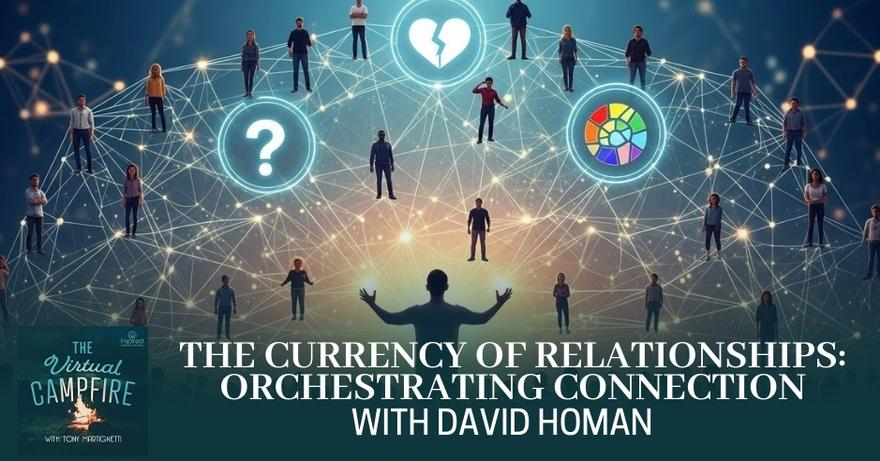
True personal and professional impact comes from mastering the intentional practice of orchestrating connection. Founder of Orchestrated Connecting, David Homan joins the show to dive into his system, called an Orchestrated World, which powers his technology SOAR Connect. He shares the life-defining "flashpoints" that shaped his philosophy, from a childhood sickness that sparked his music career to the Bernie Madoff scandal that broke his network. Discover why the core principles of curiosity, vulnerability, and embracing diversity are essential for moving beyond shallow networking. Learn the power of respecting social capital and using the double opt-in introduction to create genuinely meaningful human connections.
---
Listen to the podcast here
The Currency Of Relationships: Orchestrating Connection With David Homan
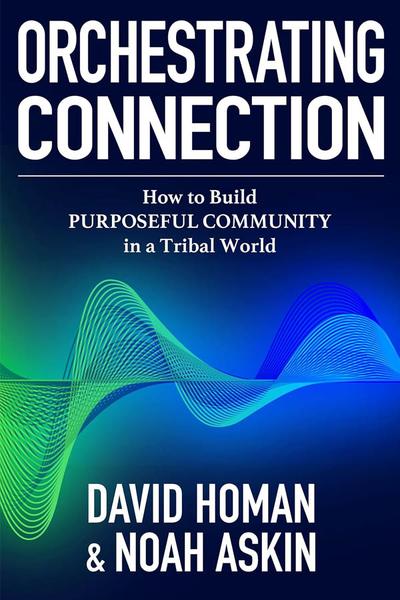
It is truly an honor to introduce you to my next guest, David Homan. David is a Founder, Author, Connector, and Composer who runs an orchestrated world. His book, Orchestrating Connection, explores the importance of purposeful community, and his technology, SOAR Connect, aims to solve the challenge of building authentic relationships amongst communities. It is truly a pleasure to welcome you to the show, David.
Thank you, Tony. It's such a pleasure to be here with you.
I just loved your book. It's such a wonderful book that really captures so many great ideas, but I just also love the angle that you come in from and this background that you have. We're going to explore that as we get into our conversation, and I'm just thrilled that you said yes.
I am all ears and hopefully everyone reading is as well to look at all the different you call it flashpoints in my life that maybe interesting enough for me to learn something from you and maybe people to learn something from us.
Flashpoint 1: How Sickness Ignited A Composer's Path
Wonderful. As we do on this show as you said, the flashpoints are how we're going to navigate the journey. Flashpoints are the moments in your life that have ignited your gifts into the world, of which you have many and lots of interesting chapters. I'd like to turn over to you in a moment and you can share what you're called to share and along the way we'll pause and see what shows up. You ready?
I'm ready.
All right, let's do this thing.
Whenever anyone says, "What was that foundational moment that made you realize what you needed to be?" It's actually the opposite for me. I had a really horrible moment when I was twelve where I got disastrously sick, like my sixth grade was bed and hospitals and blood draws and never diagnosing what ailed me. Everything that I’ve become has been to counter what happened to me, especially psychologically, also with body dysmorphia, to not really understand how I saw myself compared to how other people saw me.
It all comes from that moment where I had a beautiful life. I was a baseball player, a soccer player, a pianist. My dad was a beloved theater director and artist. My mom ran all the nonprofits around that everyone loved to do from an art walk to afterschool education, and then life was shattered. Without that, I both wouldn't be where I am now with what I built with my whole Orchestrated World, and I wouldn't have become a composer because that sickness also caused me to quit playing piano.
I got tired of Bach and Chopin and Brahms and Mozart, as much as I love them now. Nirvana came out with Smells Like Teen Spirit. I went back to my teacher and I said, "Could I learn that?" he said, "Heck, yeah." it wasn't a 5- or 6-minute piece, it was a 20-minute piece. The Simpsons influenced me to do a Mason Williams '60s song called Classical Gas, and that was a 25-minute work from guitar to piano. My creative life, my way of connecting all came about, but that was my first one, my biggest one.
I just love how you shared this. First of all, this element of we need all the different ranges of emotions and experiences in life to really come into our own and to experience who we are to become. There's the dark moments and there are the moments that we appreciate about the good times that we've had or the experiences that we've had that have made us into who we are. You're coming out of the gate with this element of the dark and the bright sides of who we are.
I love the exploration that you went on. These moments that disrupt us and say, "We don't have to always follow the same path." Being a composer, playing the piano, people always go to the classics, and that's a good starting point, but sometimes you have to disrupt that pattern and say, "What else could I be doing with this?"
Absolutely. Thank you for hearing that.
Before we got started, we talked about diversity and I think diversity starts with our own diversity. Our own ability to play with things that are not always expected.
Diversity in this day and age is something a little bit hard to talk about, which I don't understand because if you go to a country that only serves one type of food, I don't know a single person who after a week isn't ready for diversity. I went to Greece. I was on an island with one of my best friends whose name is also David. I'm a 5'8" Jewish dude with glasses, curly hair, and that's what my friend is like, who lives in LA.
We spent a week eating Greek food. He doesn't like fish, olives, or tomatoes, so it was pretty hard on him. We went to another island and there was probably the worst Pan-Asian restaurant we've ever been to, but I tell you, it was the best for that moment because we needed something different. I didn't understand the diversity I needed in my life until I realized I had to seek it out.
Flashpoint 2: The Bernie Madoff Network Betrayal
That was that next big moment for me, the one that changed my perspective on relationship building and networking. I got the dream job that was very similar to what my mom had done her entire life that I worked for, which was providing scholarships to artists and bringing more arts into the world. Got this incredible job running an amazing foundation.
We had assets, we could fund millions of dollars. We were going to expand. End of the third year, Bernie Madoff Ponzi scheme, housing bubble recession, all the assets are gone. They'd been invested since the early '90s. Everything everyone taught me about networking, which was tribal, talk to people who look like you, who sound like you, who act like you, who do what you do, that got me nowhere. By hacking that, Tony, that's what built my entire new philosophy on connection.
Getting out of the bubble that we get into because we say, "Okay, I'm going to follow the tribe that I’ve been stuck in." you feel like, "Why am I not getting the things that I want?" It’s because you're still talking to the same people over and over again and getting the same results, in essence. You do need to get out of that bubble and see who else is out there in the world who's going to break me out of my pattern.
Absolutely. The choice to break out is itself one of the most profound and hardest things one can do because it means you have to accept that the life you currently have is not the life that you want. The hardest part of that the self-work that everyone needs to go through you have to really start to understand that it's probably because of you that you don't have more of what you want in your life. It's not because of the other people around you or the circumstances alone that cause that.
The choice to break out is one of the most profound and hardest things one can do, because it means you have to accept that the life you currently have is not the life that you want.
My eleven-year-old can make that argument. I can go, "Yeah, Eva, you're 11," but at 30, at 50, at 70, it's a whole different paradigm. Yet people constantly excuse their own actions as if that wasn't the reaction that people got back to them from the way they act, the way they are, the way they lead, the way they ask, the way that they don't.
Stop Hardening: The Foundational Power Of Curiosity & Vulnerability
I would even argue based on what you just shared is that as we get older, we become tougher or we become hardened in terms of not reaching out beyond our boundaries and seeing people who are different. I don't know if that's true, but I'm just going to venture to put that hypothesis into the room.
Here's what I'd say. In my journey, I have spent now 15 years connecting more professionally, 10 years running a global community. I study people from 18-year-olds doing this to 95-year-olds doing this. From every walk of life, from multiple countries and cultures. My network is 187 cities in 35 countries' worth of people. I can tell you there's one universal thing that stops people from hardening and a second one that gives people the relationships they need to combat the loneliness we all face.
Those were the two founding principles of my network and in the book. They're not rocket science. It's curiosity and vulnerability. Yet the number of people, think about the number of people you meet being a podcast host, a business owner where you are naturally curious and think about how many express any curiosity back to you. What my co-author Noah and I found, it's about 30%, which is sad. Out of every 10 people you meet, only 3 might give a rat's ass about you.
They'd rather talk about themselves.
Of course. What? Is vulnerability a weakness or a strength? I’ve been telling everyone since I went through hospice with my father and lost my father, what it's been like. I’ve built more profoundly deep new relationships by being able to be vulnerable than I could have done in a year of talking about this Orchestrated World that I’ve now made about connecting people and impact. I’ve made deeper connections with people would pay to or salivate over building a bond with because they lost their mom.
Their dad is estranged and they are regretting what would happen if they don't reach back out. There's a humanity that stops that hardening. It's not age-specific. We just feel the older we get, the lonelier we get, as if our lives don't matter, so we dig into what we have. If we take any moment to be more curious about what's around us or what somebody else needs profound difference. That's been the richest part of my life the last few years. As I try to build a business, run a global network that's not monetized, launch a startup, write a book, working on a movie, just finished a ballet, all of these things. I feel completely unsupported, completely alone, completely celebrating, and completely optimistic about what's next all in one because I'm staying curious about what's going to happen for me.
I couldn't agree more with what you're sharing. First of all, it's not just a curiosity, it's the vulnerability that goes along with it. It's that combination of those two things that makes all the difference because you can be really curious, but at the end of the day, it's also being able to open up and sharing your own experience that creates that human moment, the human touch, that people are saying like, "I'm not alone in this process. This person's willing to open their world to mine." I often think of it as a universal dance. The universal dance is opening your internal universe to someone else's. That's vulnerable. That's what conversations do.
There's a practical reason to do it, besides enriching your life, besides engaging more with your own spirituality of people and your own religion, whatever it might be because everything in life is driven by the power of relationships, and we don't see it that way because they're so pervasive around us. What job did you get without an introduction? What investment did you get without an introduction? What company bought another company without an introduction? What person didn't get into Hollywood without somebody inviting them to an audition?
Everything is validation and augmentation of the people around you. As great as those can sound, the opposite can be just as true. That was one of my most profound moments. I was out of the Bernie Madoff debacle. I had successfully brought a charity back from negative balance to funding all our obligations, to building $5 million in assets, to increasing by 60% of our programs, expanding our board threefold. I had done an incredible job for over a decade.
I thought to myself, "What's next?" I called up people, Tony, that I had gotten jobs, who I introduced to foundations that they now led. I called up people where I had helped them meet each other and they got married. I heard back crickets. They liked me, but I hadn't given them a value they saw as a value and I realized it was because I hadn't asked for it. I hadn't said, "I'm going to introduce you to my friend, I’ve known them for ten years. They're part of a major family and they're looking for a new executive for their foundation. This is somebody I trust. Would you do me the honor of meeting them but letting me know what happens?"
Once I realized that that wasn't my problem, that was everyone in my network's problem, I built something that wasn't a business, supported the charity I ran, and then a film company I ran for Ray Dalio for several years with one of his sons and his son's incredible wife, Christina, who's still a close friend. I built this world that I call Orchestrated Connecting. The idea that the connector gives the ultimate value on this planet because relationships are the currency that sit above time and money.
Relationships are the currency that sit above time and money.
The connector is the most undervalued part of our society because we think of networking as that guy going around in the '80s handing a business card the minute they meet you and that still happens. We think about all the people that build trust and transfer that trust on the only people that can call us up and get us on a phone, get us somewhere, tell us to meet somebody, reopen up our worlds, reengage us with curiosity because we felt heard, and because we felt heard, we trust.
In this world of technology now, and I'm admittedly building a technology to hopefully hack this correctly, it's all about getting to that human connection that we lose when we feel undervalued more than what we've given. That was that moment where I realized it wasn't me, it was actually a lot of my network. What happens if I convene 40 in a room? Most powerful event they'd been to in a decade. Now I'm at nearly 200 events in 10 cities with this global network. It's all one goal. How do I get out of the way to get the right people to each other to create a profound change in their life, a ripple effect, by just getting them out of their bubble and into somebody else's?
The Technology Paradox: Human Connection's Greatest Enabler & Isolator
What I love about this, and it's ironic, is that we talk about we want to get people in connection with each other and that is the most human thing you can imagine. We're using technology to get there. Sometimes, people feel like technology's getting in the way of human connection, but it is also the enabler of human connection. I think that's an interesting thing that we're exploring here. It's also saying that we don't have to turn our turn an eye on like, "Technology's bad."
No, we're all human. Technology augments. In many cases, it can replace. The biggest challenge is it adds to that isolation because we're all looking every day for a validation of ourself. We're all looking to say, "Does my life matter? Does matter? Will tomorrow matter?" when we harden or soften, it is based on whether we think that there's purpose in our life or not.
Not everyone has to have the same purpose. I'd love to become a global thought leader, an incredibly successful startup founder. I have another friend who built a woodworking shop in honor of his dad and he loves making custom cabinets. That, honestly, it's just as beautiful. There's not one that's more important than the other because if you live a purposeful and intentional life, and a life of kindness and generosity, that's really what meaning is.
Most people live those lives of quiet desperation. They live a life of regret, they live a life of what they don't have, and they take it out on other people or they take from other people, which is why as great as I can try to make my world sound, I also very much purge takers from my world. If somebody has been proven to be a rapist, a child molester, a horrible person, an a-hole to friends of mine repeatedly, I don't just cut them out of my life, I cut them out of my network.
We should be judged by our actions and technology judges us, but it doesn't make us accountable to each other the way I wish it would because when we're accountable, we feel like we have community around us. When we feel we have community, when we walk by a trash can in the neighborhood we live, we throw the trash in the trash can. When we don't have accountability and we throw it and we miss, we don't bother to pick it up.
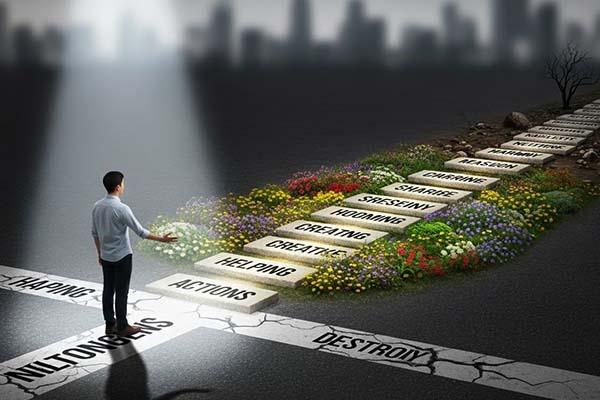
You've seen that we've seen that play out day in and day out. I think that sense of accountability for the community that you're developing or the people who you're connecting with is an interesting way to think about this. It's this idea that like, it's not just okay to have a shallow network of people who you are connecting with and who knows who you're connecting with. If you're not really taking things deeper and understanding, "Who are these people in my network? How do I get to know what do they believe in, what do they care about?" I think that's why conversations have to go a little deeper, so you can start to understand the value of your network and who are the people who are in it and what do they believe in.
There was this really sad article that came out during COVID in The New York Times. It profiled this 35-year-old guy who thought he had the most amazing social life. He was out from football Thursday through Monday Night Football. He had tons of friends, he would walk into any of these bars, people knew his name. COVID hit and he realized he had no one because he'd never had depth.
You could be fully into sports and have complete depth, but unless you understand it's necessary, you don't understand the absence of it until the distractions in life no longer become distractions, they become weight. This is what I think everyone actually searches for, which is why I love the work that you do. We search for that world where we are literally just sitting around at night, sharing something over a common war with whatever the circumstances, knowing that the next day we will wake up to something different, but the end of that day we shared together.
You are responsible for the people closest to you in your life.
That's why I love the idea of this virtual campfire. We don't understand how hard it is to get to that point where the right people around us are sitting there. In my research of this, we don't think it's our responsibility to. What I try to put back on everyone is, you are responsible for the people closest to you in your life. Especially after 25 years old, it's your choice who's around you, who you rely on, or who takes away from your life. Once you understand that it's your choice who's around you, it means it's your responsibility to ask more of it or to accept it if you're not willing to make those changes.
Take Agency: Why You're Responsible For Your Inner Circle
That's so empowering, too. The reason why I say empowering is because it gives you more agency over how you're looking at what's happening in your world, but also who you're associating yourself with. You don't have to associate yourself with people who are bringing you down or creating an environment that doesn't really support who you're becoming or who you want to become. You can go out and find new people who you want to associate with and whom lift you up, but also challenge you in a way that helps you to become a person who you want to see you're growing into. Does that make sense?
It makes total sense. We're obviously very much in alignment. Can I just add to that one more thing? Here's the thing I started to realize now in my late 40s. Building a startup, starting in your mid-40s, I mean, everyone says it's the right demographic, it doesn't certainly feel that way. With kids in school and obligations and for me, the weight of living in New York is as incredible and city as it is to invest in this city, it is expensive. All that weight, all that opportunity, all that somebody looking at me, googling me, might think, "Look what he achieved."
I'm at 3 of what I think is 5 introductions in my life that are going to change my life. I was fortunately and luckily enough ready for those first three. I was not aware when those introductions happened how they would be the catalyst in my life. You talk about those moments? These are the moments. What happened in my life because I was ready, I could have never predicted, but I know now talking to thousands of people about this, everyone who missed their moments.
That agency you talk about. If you are responsible for the people around you, if you've chosen right and keep reinforcing that with gratitude and generosity. You can build relationships with curiosity and vulnerability, you can really make it dynamic by making sure it's as diverse as possible. Meaning if you're at an event for me or you, don't walk up to the White dude. Go up to the six-foot-tall Asian woman. Go up to somebody different than us. You are responsible for the diversity in your life and it's honestly essential in this world to do so because everything is actually the way I just want to try to describe it. Strategic.
People reading this out of all that you've done, why does this moment matter for anyone reading? Here's what I figured out. I actually missed one of my moments. Somebody else got that moment. A moment that could have made me actually very well known, wealthy, which I am not, and I missed it because I wasn't ready.
I missed it because the people around me I had not imbued with the sense of my purpose, my why, my passion, how I wanted that to be amplified. They might have liked me, but they didn't see me as something that I could have been. We all have that responsibility and therefore, I hope everyone reading understands that you only have a few of these moments in your life. The work you have to do to prepare for it is not work for something glaringly obvious like, "I did all this work and now I got this job. I built all this stuff, now somebody bought my business." It's an intangible that becomes a ripple effect that once it happens, you're suddenly looking back and you're going as I am.
I found an incredible co-investor lead builder for my startup, which is called SOAR Connect, from a conference I went to in the Bahamas, which I was not sure I could spend the time on or the money on. The guy who introduced me to that person was somebody who saw me rejected by the guy who brought me there because he was rude to me.
The person who got me to the guy that was rude to me is somebody I don't actually associate with in my life, but I went to his event begrudgingly because my friend begged me to come. When I go back to the chain of it, this is 21 years in the making. Six key relationships for which two of them are people I don't like. Half my startup funding, a dev shop that has built a sophisticated project at 20% of what it should have cost, an individual whose name is Brendan who's brought me other people to invest in my startup and has become a close friend.
It's all because he had the same problem I had, which was he had trusted somebody and that person had betrayed him and he wasn't sure how to build that trust again. The moment that I lost was that moment where somebody betrayed me. They took an opportunity that should have been for me or so I thought. If I had taken that opportunity, Tony, I wouldn't be where I am. It just took eight more years to see it.
Flashpoint 3: The Double Opt-In Introduction Strategy
Hidden in what you just said is this vulnerability that you shared with somebody else that then opened another door for what you have now created, if I understand you correctly.
It’s like you go up to somebody you find attractive at the bar and you say hi and they basically turn away and talk to somebody else. That's what happened to me. This guy whose name is Alex walks up to me, he's like, "What just happened?" I'm like, "I don't know." he's like, "I'm Alex." He starts talking about what he's doing, I start talking about what I'm doing and he's like, "There's one guy. You’ve got to meet him."
He tells me about this guy Brendan and I go, "Don't WhatsApp him right now. I want you to send him my website. I want you to see if he's willing to take the time to talk to me," and because I made Alex do a double opt-in, Brendan took the call. I made Brendan tell me what he needed and I helped with an intro for him. I asked nothing in return. I was ready for that because I know the strategy of what it is to offer something without an expectation in return.
I built up a network of value for it and I'd spent five years trying to find somebody to build my startup with me and at that point I had given up and was about to do it on my own. A moment of real loss. I had this brilliant idea, so I think, everyone wants me to build it. "Will you build it with me?" "No." Let's start. Six months later, waste of time. Year and a half later, didn't work. Different direction. This was what I hope my legacy will be. I gave it all up. I went to somewhere in the Bahamas, which happened to be during January in New York, which was really great. I know you being based on the New York East is thinking right as me now, Bahamas sounds perfect this time of year.
If I were to describe this as strategic, no one would have ever made the choices I made. No one would do it. How is anyone listening able to strategically get to where they want to go person to person? You're not. You have to have a different way of being, which is why I love the work that you do, to get there and understand this is the only way. To quote the Mandalorian, like, "This is the way."
If you're not curious, you missed out on an opportunity. If you're not vulnerable, you didn't build trust. If you didn't embrace diversity and then you talk to somebody who looks like you, talks like you, and could do nothing for you, if you weren't generous first, then you don't cement that trust with an action. If you're not gracious from helping that person from this whole chain of these principles, then you're a taker. If you just embrace that the right way, you can orchestrate your life.
If you're not curious, you missed an opportunity. If you're not vulnerable, you didn't build trust.
I love the fact you use this word orchestrating so well. Obviously, there's a background that you have in music, but there is also a sense of intentionality in preparation that comes into this, which you can overlook an opportunity because you weren't prepared for it or you haven't prepared yourself or planned for some things to show up. I think with orchestration, there's also an element of intentionality to it.
That's what I'm hearing around all of this. It's this sense of like, sure, you can meet some amazing people and it can happen very serendipitously, which is wonderful, but there's also an element of like don't just, as you say, run in and just say, "Here's what I'm up to," and go off in a tangent. There's also a sense of pausing and saying, "Okay, what is it that's going to make this connection meaningful for both of us?"
Correct. My eleven-year-old's learning second violin part for Swan Lake right now. The famous melody. Only in the musical world could you actually understand what it was like if the flute or oboe didn't play that. What if it was the tuba? What if it was the piano? It would just sound off to you. It would sound off and you don't know why because it's the wrong instrument. Orchestration of people, it's the same thing. What if you chose the wrong person?
What if you were the wrong person for that? There are so many cases in the world where I look at somebody and I think, “I didn't like the. I have such respect for what they've now done.” I look at people and I think, "Okay, I love them, they were incredible," and then they show up late for five meetings with me. I'm done with that.
We don't understand it until we understand the resonance of people and when you understand the resonance, that's what makes somebody who's orchestrating a work make a difference because the way you choose the instruments creates a vibration. That sonorosity of this is what actually makes something feel like it works and we only know it when it works and even if somebody who's completely untrained in music, everyone knows when it doesn't.
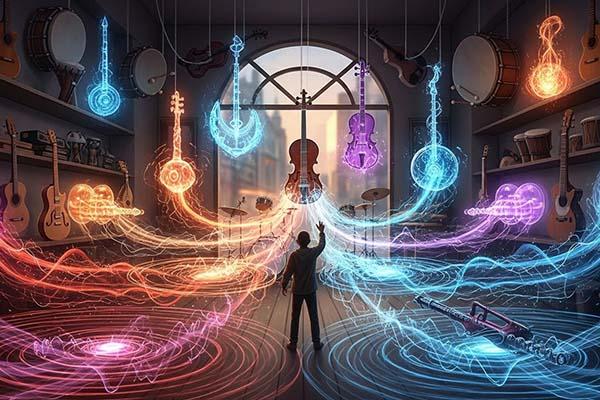
You don't have to have some tuned ear for classical music, but you know when it doesn't work.
Grunge rock doesn't have flute in it, but Dave Matthews can. Super easy. Metallica can be played on cellos. It's actually the same thing, the group Apocalyptica, and it's just as good. You don't know it until it's there.
Now you just reminded me, I love that Apocalyptica. That's so cool. They need to come up with another album, that was so cool.
They actually did. I think they came out with one, but just Enter Sandman was like the thing. That, for me, was one of the most meaningful pieces of music I’ve ever heard. I actually have now written two different four-amplified cello works as a composer based on loving Apocalyptica doing Unforgiven and Enter Sandman.
The Resonance Of People: Choosing The Right Instruments
Now I'm like, “I’ve got to go look this up,” so I'm going to have to find out more about what you've created here. David, I'd love to hear more about your story because you've touched on so many ground and there's two things I want to touch on before we get too far along. Is there another part, another flashpoint that you want to share that you haven't touched on yet?
I alluded to this when I talked about that moment where I decided to build Orchestrated Connection after Bernie Madoff. Here's the moment that happened that made me realize how much I'd missed for five years of supposedly connecting brilliantly in New York and around the US and the world. I kept getting calls, left and right, every day. A third of my world was somebody calling me and making an ask and me figuring out that they should talk to your brother's best friend's sister.
I did that well. My friend Yoni called me up and asked me for an intro. I made the intro. He said it was an incredible intro when we gave when he gave me the follow-up, I asked him why. He's like, " I love your day job helping artists, but for me you're a connector of connectors." that stuck. Of course, I don't call myself that. Another friend was like, "Call yourself a meta-connector." I was like, "That is pretentious." The uber-connector, that flatlines the minute you say it. That's actually what I why I realized I wanted to call it, as we already talked about, Orchestrated Connecting.
There's a sense of an action to it. That moment was when I realized that the two people I introduced had had over ten opportunities to build depth with each other, they knew each other, they never had. That wasn't their responsibility, Tony. It was mine. I had failed to connect two people who loved and trusted me with similar needs to each other and I swore I'd find a way to never do it again.
Now I do it like thousands of times a year and I wake up at 4:30 AM stressed and with thoughts in my head and I built this whole stuff that like is either going to succeed or fall apart depending on how many people love me at the end of a year going, "Will you join the startup, will you come to an event, will you sponsor my conference, will you?" it's all the intention of what the actual system is. I didn't realize it was a system until everyone showed me I'd already built the system, I just needed to formalize it.
I love that. Formalizing the system but also, as you said, there's a sense of taking ownership of this. It's not just a, "I’ll just throw these two ideas together and see what happens, two people together." you really took more ownership of what you're doing, not just throwing two people together.
One hundred percent. That goes back to that problem of relationship value not being valued. If I sell you something that breaks, you think your money was wasted. If I introduce you to somebody who wants to be a podcast guest and after 3 calls that they skip and then the fourth one they show up 10 minutes late into, I’ve wasted your time. Yet we do not value those things the same way, yet our reputation diminishes by doing either one of them wrong.
The introduction is a currency. It is a commodity that people don't see it that way because we don't tend to treat it that way but it's 100% the way we react. As I talked about when the music is orchestrated wrong. We react when an introduction is made wrong. We just have to be more forthright around it. That's what I’ve really tried to do is to name it all. To say, here's the way of being, here's what happens, if anyone doesn't know what a double opt-in intro is, then like you probably shouldn't be making introductions until you've Googled it and start to practice it.
The introduction is a currency, a commodity people don't see that way because we don't tend to treat it that way. But it's 100% the way we act.
It's very simple because what it means is I have respect for you, Tony. I'm going to ask if you would like to take this introduction and the person that I'm introducing, I have respect enough to ask if they want to with context. It's just not that hard, yet people don't do it, they just spray and play around or feel like they're giving value when they're not really because in my world when that happens, they've wasted very precious time I don't really have that much of anymore.
Also, social capital. Let's be honest, = social capital is something that you we should be careful about and we want to make sure that if we're going to be sharing somebody with another person, that might damage our connection with that person, with both people for that for that matter, if the just there's not a connection. They'll be like, "What was David thinking, this person's an idiot," or "This person just doesn't get me," or what have you.
The Book's Secret Sauce: Archetypes Of Takers And Connectors
Yeah, so I love this. This is great. Now we've talked a lot about elements of what you've written in the book, but I want to come back to how is the process of writing a book with somebody else? I know that can be challenging. What are some concepts in the book that you haven't talked about yet that you'd like to share?
My co-author Noah saved me because I would have written a book a lot more of like my dribble in this missive of that person being all these words. He helped me turn that into much more of a formula because he's an incredible academic, UC-Irvine, like Harvard trained. He went to Harvard with Adam Grant. Brilliant guy.
Noah helped me understand what it's about. What was the first third of the book, what orchestrated Connecting is, why it worked, the methodology, the principals. When we got into the principles of that, that was the second part which we've talked about, the curiosity, vulnerability, generosity, gratitude, diversity. The last part of the book, because I built it as a practical playbook. It's not a workbook, but if you're going to be motivated to read this book and change your life, a better give you the tools to change your life.
I do dig into how I built community, all the questions that I would have wanted to ask, but the best part, and this is the part that's gone viral for what viral is in the world of relationship building, my Instagram is focused on this and built a whole bunch of videos. It's all the archetypes of takers and connectors. As much as everyone is loved what I have done building a community, all this, what people really love is that I’ve named names for the type of people that I hate and the type of people that I love.
An example of a connector overlooked, the shepherd. Do you know when you go to an event and somebody says, “Laura's really put it all together. Laura is the reason that everyone's here,” and then the guy takes the stage with the microphone and says, “Thank you all for coming,” and everyone applauds him but it's Laura? With the trust, that's the shepherd who shepherd us. It's an important type of connector, it's overlooked, but that's the glue of both conferences, most communities, most events.
You think about all the horrible types of people, these are the more famous ones, but maybe helps gets listeners, the one every woman, but most sometimes men often hate to meet, the dick. The person who meets you under the pretense of business, but wants to get your pants. Not at a single woman who has not met that person.
The selfish a-hole. Do I need to describe that one? There's all these versions. Name it and then you start to see not everyone is the same type of taker. They're not a mid-level or the grade. Adam Grant goes into, there's actually just different actions that they take or don't take and that's how the book ends. There's actually a connector test that we've built that's on the book’s website, or OrchestratingConnection.com that lets anyone take that test for free right now and see what type of connector they are.
We didn’t do a test for you to figure out, "Tony, you're a selfish a-hole." We didn't build that version although I want to at some point. It does help people understand the combination of connectors that they are and then what type of takers prey on those types of connectors. The process was really an ironing out of all the shirts that I just like threw around with a really amazing co-author.
He knows it took longer than I liked but it happened when it happened and based on the timing, we got lucky, our sales made us a USA bestseller. Not New York Times but didn't have the time or the money which is often what it takes to get there. It was an incredible process and you need a book now like you need a podcast. You need something beyond "I have a business. I have a community." My response post-book has been profound.
Here's the thing, it's like even just getting all the accolades, the bestsellers and all that stuff, what's most important is just having a wonderful message that can live well beyond just being able to create a community that people can share the ideas and people start talking about it well beyond what you've shared on stages or in places. I think it's wonderful. The body of work you created is powerful and it will have a lot of reach well beyond what you've already done.
Before we come to a close because I just realized where we've been going on for so long, this wonderful context here, I have two more questions. The first one is you've shared a lot about your personal journey, but is there something that you've learned about yourself that you haven't shared already that you’d like to share, maybe something a personal insight about your evolution?
My dad just passed. Whenever one talks about their father, they're supposed to talk with reverence. I remember in third grade, there’s a Pizza Hut all you can eat birthday party, followed by Aladdin's Castle, where you could do all you can play for two hours. My friend Tyson would beat everyone in Street Fighter or Mortal Kombat, and we would just bow to him.
At 2:00, I sat in this Pizza Hut, sad, dejected, alone. My dad told everyone it started at 2:30. Every event I do, I’ve had 200 sold out of events, I’ve made major conferences, I am still that third grade kid, sitting there going, “Where are all my friends?” To this day, even though the fault was my dad's telling everyone 2:30, I don't know why, my mom never knew why. Everyone showed up at 2:30. It was packed party mostly because of the all you can play arcade.
I professionally run events. I speak at conferences. I wonder every time, “Will anyone show?” I mentioned that because we do not escape the things that happen when we're younger. We just have to overcome them in a way that makes us not act like a victim or a martyr and be more resilient in how we continue to encounter that ongoing fear, whatever our fears are.

It's such a beautiful thing to share because there's something about that. Just keep on showing up. Keep on doing the work. In the face of fear, we still have to bring our gifts into the world. You said earlier something that really had anything thinking. Sometimes, people hold back the things that they're most meant to do out of fear and sometimes we need to get them that the right environment, the right people around them to unlock that ability or that thing that they're meant to do in the world. That's where orchestrating connections can really allow people to see what is possible.
Thank you for getting that. You got one more question for me, right?
The Big Zinger: Books That Changed David Homan's Life
Last question, yes. This is the big zinger. What are 1 or 2 books that have had an impact on you and why?
Two of my favorite authors, no one probably has ever uttered their names in the same sentence. Kurt Vonnegut and Laura Numeroff. Do you know who the second one is?
I’ve heard the name, but I can't think of her book.
All right, so I’ll give you the first one first. Kurt Vonnegut. If I ever do get a tattoo, which I say if I ever sell my startup, I will, like my friend JC from years ago at Emory, it will my tattoo will say, "So it goes." Slaughterhouse-Five. A book that has major historical ramifications and in all of the war and all the atrocity and all the rest, the lead character just keeps saying, "So it goes." whatever life gives you, whatever happens, it is a journey you have to love the journey and that phrase is what sticks with me.
Now the second one, and this is my psychology and how I'm building my startup, how I built my network. Laura is known for the If You Give a Mouse a Cookie books that every parent has read. If anyone hasn't read this, go buy this book and if you don't have a kid or buy it for your friend's kid if they're under 5 or 6.
It's about how you give a mouse a cookie but then the mouse needs milk. If the mouse needs milk and has the cookie, then it spills the crumbs and then it has to get a broom. Without the broom, something else goes wrong. It's a circuitous logic that in the end makes you think because the mouse has milk, you have to give it a cookie. The way that human psychology work, the way that community building works, you have to give people things that help them be both selfish and selfless.
 The way my startup works, I solve this thing which is I can't believe hasn't been solved, which is no tech I’ve seen yet at scale takes the people you've WhatsApp’d, e-mailed, LinkedIn, iMessage’d, met with, and builds you a better address book of everyone you've met. Why? I don't know. If you get that, then what's the point unless you can sort it better? If you can sort it better and then what's the point unless you know who's really the highest ranked, what we call our SOAR, Strength of Authentic Relationship score. If you have that whole score with a better CRM and a technology that helps you put your address book back in the same place rather than you and me texting each other, last time we were supposed to do a show and me not saving your number because I suck at that.
What's the point unless I know to ask for something that you could help with me with or me with you. If I make the ask, then what happens? I build new relationships which I need to then put back into a new address book which is that circuitous logic. It's a huge founding principle. I didn't build my startup thanks to this incredible children's author but it's the way I'm understanding the logic of how we needed to scale and build multiple products in one because one wasn't good enough, as it wasn't good enough to give a mouse a cookie. So it goes.
I love how you weaved them both together. That was brilliant. I love this. This is wonderful. David, this conversation has been just nothing short of amazing. I love your stories, your insights, you've shared so much brilliance and I feel like I could have another conversation on the same thing and just continue to share so much of what's going on here. Thank you so much for coming on the show and thanks for bringing all that you did.
Absolutely. Thank you for having me and thank you everyone for reading.
Of course. Before you go, I want to make sure people know where they can reach out and find out more about you and the work you're doing.
I make it easy. Orchestrating Connection, Orchestrated Connecting. The startup is a little different. It's SOARConnect.ai. That's really in a beta mode coming out. My world is easy to find as is my music. If people look at my website, HomanMusic.com, and they look at Ori or Box, those are the two amplified four-cello works that I wrote. They're to listen or on Apple or Amazon or everything else.
I'm so going there. I'm surprised I haven't checked it out yet, so that's happening now. Awesome. Thank you so much and thanks to readers for coming on this journey. I know you're leaving just completely blown away. Let's start connecting in a more intentional way. Let's do it in a way that's going to help us become the better selves that we are and that we can be. Let's do it together. That's a wrap.
Important Links
- David Homan
- Orchestrating Connection
- Slaughterhouse-Five
- If You Give a Mouse a Cookie
- SOAR Connect
- David Homan Music
Love the show? Subscribe, rate, review, and share! https://www.ipurposepartners.com/podcast

0 comments
Leave a comment
Please log in or register to post a comment