

The Secret To Leadership & Connection: Adventures, Dinner Parties, & 'Team Intelligence' With Jon Levy
What if everything you thought you knew about leadership, trust, and even personal fitness was wrong? Bestselling author and behavioral scientist Jon Levy isn't just an expert; he's lived a life fueled by uncomfortable adventures—from surviving a bull run in Pamplona to nearly freezing in the Arctic—all in the name of understanding human connection. But his most revolutionary insights come from a more intimate, yet bizarre, experiment: "The Influencers Dinner," a secret dining experience where Olympians, Nobel laureates, and prime ministers cook terrible meals together, only to realize the surprising, simple truth about building lasting trust. In this deep-dive interview, Jon Levy unpacks the contagious nature of behavior, the myth of the "well-rounded" leader, and the core concept from his new book, Team Intelligence: why the only thing that defines a leader is the ability to paint a compelling vision of a better future. Get ready to challenge your assumptions about what it takes to live an extraordinary life and lead an effective team.
---
Listen to the podcast here
The Secret To Leadership & Connection: Adventures, Dinner Parties, & 'Team Intelligence' With Jon Levy
It is truly an honor and a pleasure to introduce my guest, Jon Levy. Jon is a behavioral scientist specializing in trust, leadership, and teams. He is the author of the New York Times bestseller, You're Invited, and the newly released Team Intelligence. You may also know him as the founder of Influence.rs, the secret dining experience and private community for Olympians, astronauts, Nobel laureates, and even the occasional prime minister and princess. It is truly a pleasure to welcome you to the virtual campfire, Jon.
I am very excited to warm up by the heat and flame.
Especially since it is cold where I am.
It is frigid. It is far below freezing where I am, too.
I am dreaming of tropical places these days. I am a huge fan of the work you do. As I was saying before we started the episode, The 2 AM Principle is one of my favorites.
The Science Of Adventure & Early Research
That is a deep cut from a long time ago. It was published over a decade ago, which means that I wrote it 11 or 12 years ago at this point. That book has a crazy backstory. For your audience, behavioral science, my original area of research, was around connection and trust, because I was single and in my late twenties, I got very interested in the science of adventure.
I did not have the responsibilities of many children as I do now. I wanted to understand what causes people to live exciting lives. I started looking at the research and putting it to the test. I did all those crazy things that nobody should ever do, and almost died in the process. You might say, "Jon, you're exaggerating. What do you mean you almost died?"
I would set out these insane goals, like going to the biggest event in the world, wherever it was, every month. I did that for a year straight. During that time, I was crushed by a bull in Pamplona during the Running of the Bulls. I fell out of a moving car in Burning Man in the desert. What other crazy things happened that year? I almost froze the next year. I almost froze in Antarctica while doing a zero-degree swim.
One of the weirder things I did was, within ten seconds of meeting the person behind the counter at Duty Free in Stockholm airport, she decided to quit her job and travel with my friend and me. Adventures galore, and really a lot of physical pain and embarrassment from having strange conversations with people.
That is what life is for. It is for living. Although your book should have a disclaimer that says, "Do not try this at home, kids." It actually should be something that asks people to say, "What is the thing that you need to get out and do to experience life more fully?" We are setting off with a bang here, but I do want to share a quote that you embody from Hunter S. Thompson.
This is a long one, but I will just share it, "Life should not be a journey to the grave with the intention of arriving safely in a pretty and well-preserved body, but rather to skid in broadside in a cloud of smoke, thoroughly used up, totally worn out and loudly proclaiming, What a ride." How does that rest?
What a fantastic sentiment.
Love or hate him, Hunter S. Thompson had a lot of interesting ways of really bringing out the essence of life.
We could end here and tell your audience to go out and find one thing that scares them and do it.
We have a lot to explore.
I will say this. Living an adventurous life is in direct proportion to how uncomfortable you are willing to be. When we say, "Life is lived in these moments or these experiences," that is true and not true. I have more forgotten memories of adventure than most people will have adventures in a lifetime. The beauty of an adventure is that it forces you out of your comfort zone. It calls you to grow emotionally, physically, and mentally. The real gift of it is not the successes, the failures, or the stories.

It is that throughout the process, we are fundamentally changed. The person we become is a new and different version of ourselves, hopefully mostly for the better. When you approach a stranger at a bar in Bangkok and invite them to join your group and hang out for the night, that muscle of being able to approach people is going to be stronger after, regardless of whether it is in a board meeting or when you're pitching a product and trying to raise capital for your company. The gift is the growth.
We are here to evolve, not to stay the same. If we were staying the same, then we would still be at the level of the little children we were.
As someone who has many kids, they are really cute, but not very functional.
You do not want a little baby in your boardroom. I am looking forward to exploring your journey. We are going to explore your journey through Flashpoints. The moments in your life that have ignited your gifts into the world. You have had many, but we will be cherry-picking them based on what you want to share. I'll turn it over to you. Share what you are called to share. Along the way, we will pause and see what shows up.
You just want me to start by picking a moment, any moment.
From a deck of cards, it could be a childhood moment. It could be a moment early on in your career where you felt like, "This is not what I am meant for."
There are 2 or 3 important things to understand when we have a conversation about my career. The first is that I am dyslexic. Nowadays, being dyslexic is generally well understood. There are programs for kids with dyslexia or learning disabilities, and they get support, and they can function well. When I was growing up, it was not well understood. It was understood as being stupid. I was the last kid to learn how to read.
I had a lot of problems in school because teachers thought I was being lazy, and I would have to fake feeling sick to avoid reading out loud, because I would read at the level of somebody many years younger than me. I actually think that led me to develop superpowers. When you have to compensate for an inability to do one thing, you'll often develop other skills. I should also point out that I was not very socially capable. I was a good observer between the two.
When you have to compensate for an inability in one area, you’ll often develop other skills.
I did not have the option to find answers in books, and I was not really popular. I began looking at the world through a scientific lens, thinking maybe I could get answers. When I was about 28, I was overweight, underemployed, and broke. It is a great combination. If you have ever been there, I highly encourage finding a way not to be any of those things. I was setting my alarm for 6:00 AM every day, and then hitting the snooze button, and then spending the day beating myself up for not being the type of person who could wake up at 6:00 AM.
Discovering Behavioral Contagion & The Birth Of The Influencers Dinner
I thought I was smart and capable, but I'd keep hearing all this advice about "Wake up early, own the day," and so on. I could not do it. I came across a study by Nicholas Christakis and James Fowler. They were curious about the obesity epidemic. They were curious, "Does obesity spread from person to person like a cold, or is it a percentage of the population like Alzheimer's?" What they found shocked the research world. They found that if you have a friend who is obese, your chances of obesity increase by 45%.
Your friends who do not know them, who are not associated with the situation, have a 20% increased chance. Their friends who do not know anybody in this situation have a five percent increased chance. This effect is true for happiness, marriage and divorce rates, smoking habits, and so on. I said, "Maybe the real reason I am not fit isn't that I cannot set my alarm for 6:00 AM. Maybe the real reason is that I just need friends who are athletes."
I would actually exercise as part of our socializing rather than creating this artificial thing called a 6:00 AM workout. Instead of going to see a movie and eating a tub of popcorn with a friend, maybe we will go for a run together. That is how behaviors are contagious. They're about the transfer of habits and routines that affect our decisions. What I did was spend about a year researching what causes the most successful people in our society to engage and connect.
To prove out my theories, I created a secret dining experience that has by far the weirdest design ever. We invite twelve people to cook dinner together anonymously. Nobody knows who is going to be in the room. When we sit down to eat after cooking a terrible meal together, people find out they're sitting with astronauts and Olympians and Nobel laureates and editors-in-chief and celebrities and everyone from Oscar winners to the guy who won a Grammy for barking on Who Let the Dogs Out.
I've hosted about 4,000 people at a completely free dinner. Ever since then, frankly, my life has improved consistently. My closest friends who are not from childhood, I've met through them. I've started exercising because a friend who is a Navy SEAL invited me to work out at his gym. When you hang out with people like that, standards just change. Life has been really interesting and wonderful, complex and difficult, of course, but just being able to surround myself with interesting people has made all the difference.
Jon, there is something that is so wonderfully simple about what you just described.
I've often been called simple-minded.
The thing about it, Jon, is that there is something about this which most people just do not seem to take that initiative because they're afraid of what might happen or afraid of people not showing up. I’m intruative to what they have been taught. It’s having the courage to invite people into this space, and it is not fancy. You do not have to go out to a big dinner or a restaurant.
The food is just terrible. Listen, it is fine, but nobody would pay for this food, especially not the number of people who could all afford to go to the most expensive places. Frankly, we often make Mexican food, and Chipotle tastes better. It is not a problem of having wealth or status, but it is really a willingness to connect with people. The first dinners I did were not with the impressive people I have now. It is just that I kept doing them. That is the difference between the next person and me is that I just kept doing it.
I was willing to deal with the rejection, and I did it to a scale that nobody ever imagined. When people say they run a supper club, they're like, "We did four this year. I'll do 100 events a year.” It is like a completely different scale. I have an entire team of people who work for me, all virtually, to do all this stuff. If you're like, "I do not have the resources," I had to send a friend money through PayPal on my credit card so that he could give me the cash so I could afford to cover the expenses of the first dinners. I was broke.
This is amazing. We talked earlier about these grand adventures, but here is something you do not forget is a simple meal with amazing people. People sometimes are amazing, and they do not even know it. One thing that I've learned over the years is that our brilliance is hidden, and sometimes we have to get in conversation with people who see us to bring that brilliance out.
Here is what I find also really interesting is the number of people who experience an extreme level of imposter syndrome. They are literally the best in the world at X, like the world memory champion. They're like, "Why am I here?" I'm like, "You literally have the greatest mind for memory in the entire world. You're wondering why you're sitting around my table? I do not have that skill. There isn't a person here who wouldn't want your memory skills. You need to get over it and be willing to connect with folks."
There are so many directions I want to take this.
I love to hear them all simultaneously. Everything all at once everywhere.
Where would you like to go in terms of a next flashpoint? You started these dinners. They started to go really well. Is there another moment that you found yourself saying, "What happens now?"
People tend to like to hear about specific moments where it all changed. I will say with the dinners, there was the idea in doing the first one, but what made the difference was just the sheer consistency of it. At some point, I decided, "I'm going to keep going on this." I even had friends say, "You're onto something; keep doing it."
I do remember that, as a policy, I tried to make sure that there was a journalist at every dinner. The reason was not that I was looking for any attention, but I knew that at some point in the future, I would have a story to tell. I didn't know what it would be, but I didn't want to be searching for those media people when I needed them.
The New York Times Article & The Perception Vs. Reality Of Success
I wanted to have the relationships for 5 or 10 years at that point so that they would be invested in helping me or supporting me or pointing me in the right direction, even if their outlet could not do anything. At one point, a few years into doing this, one of the editors said, "My wife would like to pitch a story about these dinners for the New York Times." I said, "We're not really looking for media. I appreciate it." He is like, "Listen, this is the New York Times. Just trust me and do it.”
You do not say no to the New York Times.
I said, "Let us go ahead." They came, and after the story was published, I suddenly got all this attention. I was selected as one of the most eligible bachelors in New York and one of the most eligible bachelors in the US. Let me tell you, when you're a single man, and you get on one of those eligible bachelor lists, you think you've got it made, except that the only people that care about eligible bachelors are not the people you want to date. It had the complete inverse effect of anything I wanted.
It was all people trying to use me who wanted to date me, and not the people I'd actually want to spend time with. When you run a dining experience, it is about having a real and meaningful connection with people, not having a bunch of transactional or social-climbing individuals, then trying to find you is not a great thing. The second thing that was really funny was that after the New York Times article, my friends would get messages like, "Can you introduce me to your friend?"
One of them got a message that was like, "You know that billionaire friend of yours who runs those dinners? Could you connect us?" This friend who got the message was staying at my apartment at the time. She was a little down on her luck career-wise. Neither of us had two pennies to rub together. I was barely holding it together. I was deeply in debt because of college. I had a job, luckily, at that point, and I was earning better money, but I was just trying to dig myself out. Getting these messages really showed how there's no relationship between people's perception and reality.
I love that message. I want to pause for a moment to say I hear this all the time, but I know this is a reality, and people always see how you're doing on the surface. The reality is very different. I think sometimes we need to make sure that we do not fall into the trap of believing all the hype and remain true to ourselves. You are someone whose depth is important to you.
I was getting paid to get drunk.
The depth was important.
Now with young children, you do not even get to drink because it is no fun hanging out with them. I have not had a drink in as long as I can remember. I made up for it in the past, so I do not think my body is complaining.
Hearing you share this is very interesting because it does create this path to saying, "How am I getting hung up in my own thoughts about what is real and what is not?" Even for writing a book, I have written a few books myself, and people think, "You write a book, you must be making tons of money through that." Always no. It does not always work that way. It is what you do with it.
I think the average book sells 500 copies or something like that. Harry Potter makes money. JK Rowling makes money. If you're already a celebrity with a large following, you're probably having a million-dollar book deal. The rest of us do not make money like that. Even if you're successful, you do not make money like that from your books.
You've got to do it for another reason. You have to do it for the passion for the idea and the willingness to actually see what you can create when you put a book out into the world. This leads us to another thing that we’re going to explore, which is your latest book. I would love to hear what the key ideas are. I have already read it, so I want to make sure to share it with the audience, Team Intelligence. What led to this? Share a few ideas from it.
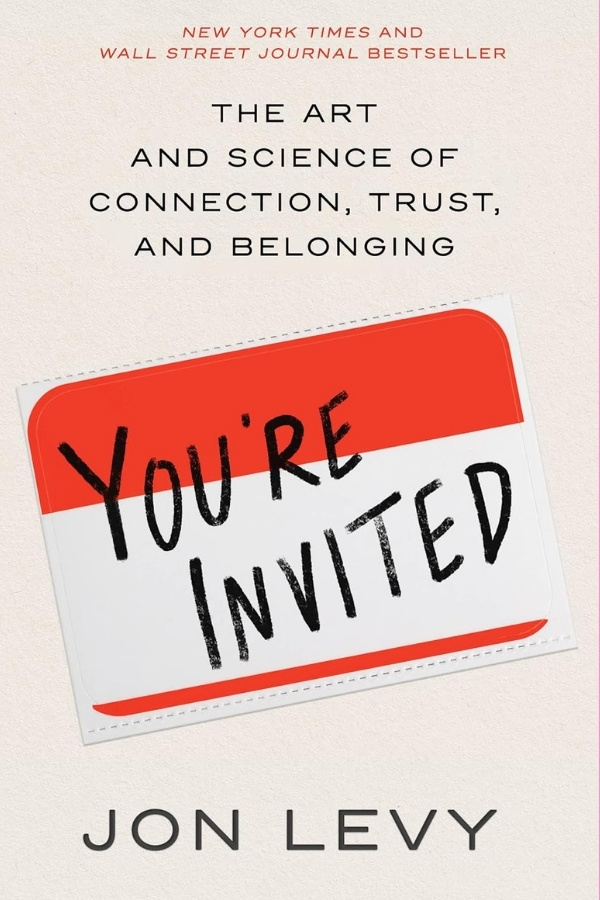
I had written another book a while back called You're Invited, which broke down that basically anything we care about, from how long we live to having high company stock value to having effective teams, comes down to who we're connected to, how much they trust us, and the level of belonging that we share. I really break down the science of all these things. It turns out that human beings basically do everything wrong or backwards when it comes to building trust and connection.
 I said, "Let us now ask the next question, which is that the smallest unit of effectiveness is not the individual, but the team." You might be really great, but what can a single individual accomplish by themselves? Frankly, very little. The question then becomes what really defines a leader and a team. When you look at all of the educational concepts around this, you'll find that all the top universities promote the idea that there are these essential characteristics or skills for a leader, and if you develop them, you're going to be a great leader.
This did not make any sense because after hosting thousands of people at my dinners, what was clear was that none of them had these skills. Also, none of the most famous leaders in our society have them. Elon Musk is not particularly known as having the ability to create psychological safety or consensus among his leadership. That has not stopped him from being effective as a leader. Now you might not like him, that's fine.
Defining The Core Trait Of Leadership (Creating A New & Better Future)
Nobody can doubt his effectiveness in the way that the business world measures it. His companies are worth a fortune. They produce products that generally people love, everything from Starlink to Teslas. It gets us to have to ask. If having these skills are nice to haves but not essentials, what is the defining characteristic of leadership? The answer is stupid, frankly. It is just so dumb, annoyingly so. When we look, there is only one thing that defines a leader.
It is that they have followers. You cannot be a leader if nobody's following you, by definition. Now, the reason that we follow is not vision or charisma or any of these other nice-to-haves that we keep being told, because there are plenty of leaders who do not have vision or charisma. The question became, what is the trait or characteristic that actually matters?
It turned out that it was not really a trait. It was a weird quirk of human behavior, and it works like this. Do you remember when you were in high school, the Sunday nights at about 6:00 PM, the Sunday scaries? Notice you're completely free, but you feel anxious because tomorrow is school. Now it is Friday at 1:00 PM. You're locked in a classroom learning about who knows what. How do you feel?
Anxious, ready to get out.
You're excited and happy. Herein lies the paradox that human beings do not relate to the present. They relate to the future they believe they have. Which means that the reason we actually follow someone is that they make us feel there will be a new and better future. You do not need to like them. You do not need to want to hang out with them. We will ignore and forgive all of their transgressions if they can make us feel that there is a new and better future.
There’s only one thing that defines a leader—and you’ve read the books, so I won’t ask you to guess. It’s this: they have followers. You can’t be a leader if nobody’s following you.
That is wild because it means that a lot of incompetent people who cause us to feel that the future will be better will be followed. You could have a bunch of idiots following a moron. It does not guarantee effectiveness. The question then becomes, what causes us to actually follow them? What triggers that experience? Tony, I would argue and say you're not a well-rounded person.
That is a great thing because that means you have certain super-skills that are so disproportionately strong that when people interact with them, they go, "That guy really knows his stuff when it comes to whatever it is." That is what causes people to tune in to your show. It is not that you're well-rounded.
It is that your super-skills are so disproportionately strong in certain areas that they stand out as worth following. The easy-to-see ones are vision and charisma because they're so big and in-your-face. Your super-skills could be anything from being organized to being able to translate ideas to being a great listener so that other people can express themselves.
Suddenly, you hear things that you would have never otherwise heard. Fast forward, and what we’re beginning to see is that the defining characteristic of a leader is that they get the crew together for a heist, and that is what the second half of the book is about. Team Intelligence. What allows the team to solve the problem as quickly as possible with the resources it has?
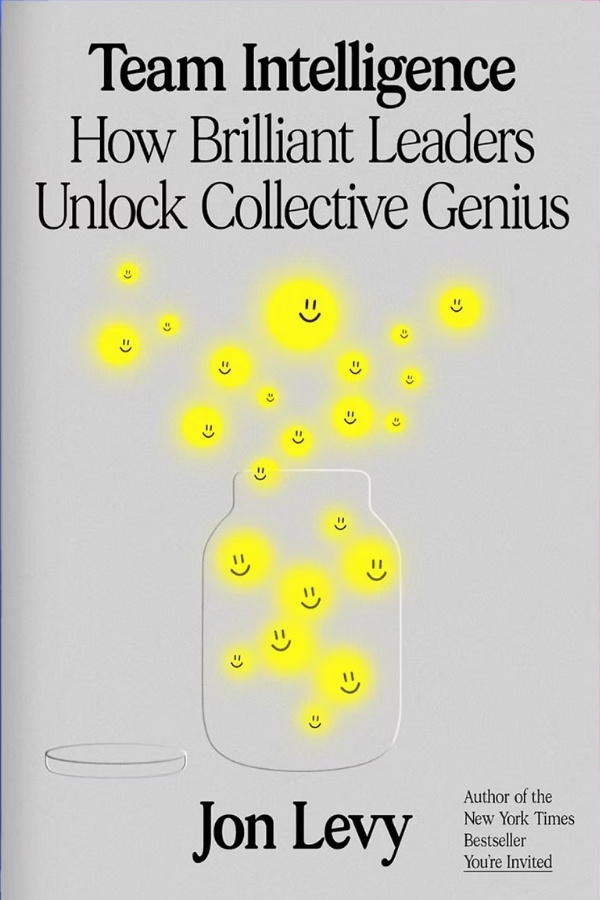 Jon, this book particularly seems to embody many of the early things that you discovered about yourself. You have your own unique things that stand out that you may not realize at first. You realize that they are superpowers that stand out. Along the way, this book highlights that very thing: that you do not need to fit in with everyone else or get along with everyone else, but you need to find that thing that gets people to say, "This is why Jon is doing what he does." Would you agree?
If we want to be followed, being a leader is not the same as having accountability. Accountability is being in charge of the result. You could be the senior vice president in charge of a division. You're accountable. When you're in a meeting, and your head of engineering speaks up, and you’re listening to them, they're leading in that moment. They're just not accountable for the result. Nobody is coming to them and saying, the CEO does not go to them and say, "How come you're behind on production?"
They'd come to the person accountable. It is important. We've collapsed leadership and accountability. Leadership is a fluid characteristic in teams where you do not really need anybody in charge, although you probably need people who are accountable. The actual leading from moment to moment can vary depending on expertise, knowledge, and ideas.
Team Intelligence: The Importance Of Complementary Skills & Accountability
I love that you bring that accountability. We need to have that person who can get people on board, but then also make sure that we have the executor, the person who can bring this into action. When it can be embodied in one person, wonderful, but that is not always going to be the case. That is why we need a team that can bring a lot of these elements together. We identify how to curate the right elements so that the start can be brought in together. We get things started, but then we follow through, and we have the right people to do the follow-through.
You're pointing to something really important, which is that a good team is not made up of just top talent. If you had an entire basketball team made up of five LeBron Jameses, they would actually not do very well. That is because of something called the too-much-talent problem. When there's too much top talent on a team, they underperform because everybody is used to being the one who has the ball and shoots. Not everybody can shoot the ball.
What you need is a well-rounded collection of skills, knowledge, experience, and mental models. We need a variety of skills to make a team function. A leader's job is to assemble the team, develop the followers, but it's also to ensure that the team is as smart as possible so it can solve problems quickly.
They're accountable for that in the traditional corporate environment, but it does not mean that they should be doing all of it. If you're not the best at giving feedback, great. Why should you be? Pick somebody else from the team who is the coach in terms of the feedback stuff. If they have very high emotional intelligence and they're trusted, let them do it. There is no reason that if you're terrible at it, everybody else should suffer as a byproduct.
We need a variety of skills to make a team function. A leader’s job is to assemble the team—developers, followers, and contributors—and to ensure the team is as smart as possible so it can solve problems quickly.
Now I’m going to pressure-check this for a moment and say how do we get ahead of the leaders who maybe are able to bring followers along, but we may pressure-check whether this is the right leader for us to follow? If you know what I mean.
What you're saying is, how do we make sure that somebody is the right leader for the audience? Let’s start with a few things. I do not think that there is a clear answer to that. If there were, we would be solving hundreds of years of management problems in a single swoop. The problem fundamentally is that everybody wants a simple answer or a test, and life does not work that way. We're getting better, and probably AI models will help, but it is just not that simple as plug and play.
You do not get to just take a test and see if somebody is the right leader. When we previously tried that with things like Myers-Briggs, it was a train wreck. Myers-Briggs turned out to be a complete pile of BS that made people think that they knew what was going on. Really, it just made them feel good because it described positive characteristics. There is this thing called the Forer effect, which is that if I give you a list of positive characteristics and tell you that you have them, regardless of whether you have them or not, you will feel flattered and feel that it is true.
That is because the brain is really good at finding examples of just about anything. If I go, "You're really methodical, and I appreciate that about you." You'll be like, "Look at all those times I was really methodical, and things worked out." I can say, "Tony, what I really like about you is that you're really good at improvising," which I would argue is the opposite trait to being methodical. You're like, "All these times I was really good at improvising, man, that really saved the day." The truth is that you might be better at one of those than the other, but you have to be decent at both.
If you're not methodical in the way that you prep for these shows, they're not going to go great. If you're not good at improvising when the content goes weird, then the interview is going to feel strange. You have to have some quantity of both of these skills. The Forer effect shows that as long as I give you a positive statement, you think it is true. When it comes to figuring out which leader is right for whom, it is not that simple. It is more about having a team with the right collection of characteristics.
I challenge each other too. There is healthy friction to say, "I hear what you're saying, but maybe that is not true." There is a bit of that back and forth that allows us to get to a better path together as opposed to having blind allegiance to one particular person.
When you're in a team, your responsibility is to maximize the intelligence of the team. If you're overly stuck having allegiance to one person, you miss the point of actually solving a problem that’s meaningful, because then you do not have intellectual humility. Intellectual humility is on the spectrum between being gullible and being so stubborn that you cannot get anything done.

It is a place where you can feel confident in your ideas, but are willing to re-examine them. If you're focused on a person rather than the outcome, then suddenly you do not have intellectual humility. You're trying to force an outcome. You are going to miss a whole bunch of potential solutions and problems that might need to be considered.
This is really sparking so many things for me because I just think about even AI. AI is always going to be in favor of trying to find evidence to support your claim so that you feel good about whatever case you're trying to make.
That will have to change over time. This stuff is antifragile. This is a phase just like there was a phase of the internet with slow-loading photos, where you're waiting for your dial-up or yelling at your parents for picking up the phone when you're on AOL. It is just a period of time. All that stuff will work itself out.
Now I am hearing that noise in my head.
The AOL noise. The missiles are launching. When we were young, to get onto the internet, we would have to connect a phone through a modem. If you were lucky, nobody would pick up the other side of the phone in the house. If they did, they would hear what could be described as the sound of weird missile launch codes being passed in a digital format. That was the sound of your computer connecting to the servers. It was very strange. We would go online, and people would have odd names on AOL. We did not have texting back then, so we would message them by their screen names, which were often awful.
Jon, we've covered a lot of ground, but before we get to our final question, I have this urge to ask you. What is one thing that you want to leave people with in terms of the mind plant as we move forward into the future of connection and followership? What do you want to leave people with?
The Primacy Of Human Connection In The Age Of Technology & AI
I would say that whenever we look for a solution, it is tempting to find technology, but at least the way things are right now. The most human things seem to be the things that make the biggest difference. That means that it is the ability to connect with people, to build trust, to create psychological safety, which is this feeling that someone on your team can express an idea that might go against the group, and they will not be in trouble or get kicked out for sharing it.
All these factors are really at the heart of what it is to be effective. Yes, should you learn to work with AI, and should you learn how these technologies work and apply them? Yeah. If you actually want to be effective, being really good at connecting with people is probably your best bet for increased performance.
It reminds me of this thing that I’ve been really leaning into, which is that if you want to have better ideas, be in community with people and connect with people, because we do our best thinking with others.
This is so interesting. There are two different ways to look at this. One is that we are exposed to new ideas because of others. There is a network effect that takes place when you have more exposure to more ideas. All a new idea is a collection of old ideas reformatted, reproduced, and combined in different ways. The more exposure you have to unique ideas, the more opportunities you have to pull something together to create a better idea, solutions, or be creative.
Now, when it actually comes to producing ideas, there's research to suggest that it's actually best done alone. You will come up with more unique answers if you go for a very long period of time, trying to come up with solutions on your own. When you work together, it's just a waste of people's time initially. You come together and explore those ideas.
It’s a good clarification. I like that. It is like the diverge, converge element to it.
Work together, work apart.
The last question we have. This whole time went by in a blur. It just feels like, “We need more time.” Here’s your last question. What are 1 or 2, maybe 3 books that have had an impact on you and why?
Number one would be The Boy Who Wouldn’t Grow Up. The Adventures of Peter Pan and Wendy. Just because there is a unique experience to seeing the world through the childlike wonder and adventure that Pan, the Lost Boys, and Wendy did. That was by James M. Barrie. The second would be The Little Prince by Antoine de Saint-Exupéry.
The things that are most human seem to be the things that make the biggest difference.
It is a book that possesses a lot of simple truths and is quite wonderful. In being an adult, as a behavioral scientist, there is really the Bible, which is Daniel Kahneman's Thinking, Fast and Slow. That book is really solid. His next book was a bit weak, Noise. I was underwhelmed by it, but Thinking, Fast and Slow really was the collection of research that challenged everything we thought about economics and human behavior. It is a really great primer.
There is an entire collection of books in the industry that fit that bill that I have very much enjoyed. The problem is that there are a bunch of books that are really popular that have been debunked that I would have loved to have recommended because they were fun to read, but the science just did not back them.
Some ideas are timeless, and they keep staying with us, but some books, even if they were debunked, needed to be written so we could play with them. I think that is a good thing.
Depending on the book. I think we could have done without some. There are just so many books out there; there are 16,000 self-help books that come out every year.
It is crazy. This was a fantastic exploration, and thank you so much for bringing your stories and insights. I feel like we still just scratched the surface. Thank you for just coming on.
This has been a joy. Thank you for putting up with me and also my ADD storytelling. This has been a treat, and I hope your audience has enjoyed it.
It’s truly my pleasure. Before I let you go, I want to make sure people know where to find you.
You can find me on my website, JonLevy.com. I am JonLevyTLB on all the socials. Reach out. I am super communicative, especially on my website. I welcome hearing from people.
Do read Jon's books. They're fantastic. Each one of them, in their own way, brings a different angle, and it’s just a great exploration. Thanks again to the audience for coming on the journey. That is a wrap.
Important Links
- Jon Levy
- Jon Levy on LinkedIn
- Jon Levy on Instagram
- Jon Levy on X
- Influence.rs
- The 2 AM Principle
- Team Intelligence
- You're Invited
- The Boy Who Wouldn’t Grow Up
- The Little Prince
- Thinking, Fast and Slow
- Noise
Love the show? Subscribe, rate, review, and share! https://www.ipurposepartners.com/podcast

0 comments
Leave a comment
Please log in or register to post a comment