
Trailblazing Women Leaders: Courage, Impact, And Breaking Barriers With Dr. Sheila Gujrathi
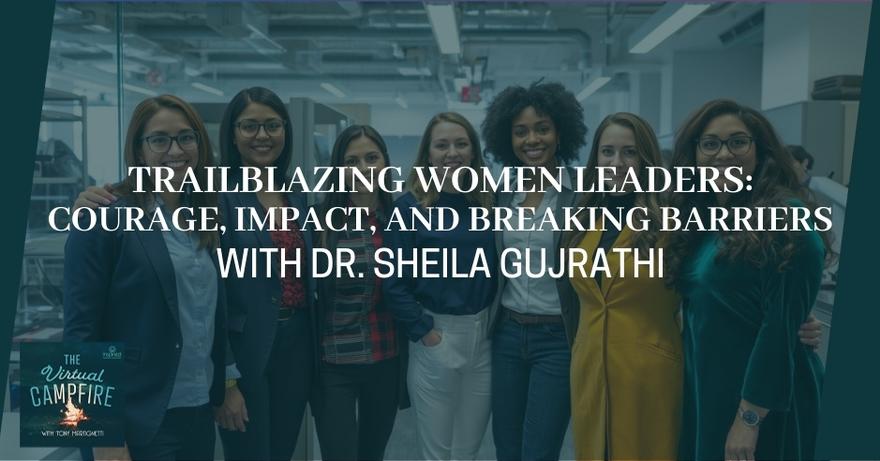
Trailblazing women leaders face unique challenges and opportunities in biotech and beyond, and this conversation dives into what it truly takes to rise and make an impact. Dr. Sheila Gujrathi shares her journey from physician to biotech executive, highlighting the flashpoints that shaped her path, the courage required to break new ground, and the lessons learned navigating leadership as a woman of color. Dr. Gujrathi also discusses founding the Biotech CEO Sisterhood and the South Asian Biopharma Alliance, as well as her bestselling book The Mirror Effect, offering actionable strategies for building supportive networks, embracing authentic leadership, and fostering inclusive workplaces. This episode inspires reflection on purpose, growth, and the power of lifting others as we rise together.
---
Listen to the podcast here
Trailblazing Women Leaders: Courage, Impact, And Breaking Barriers With Dr. Sheila Gujrathi
It is my honor and pleasure to introduce you to my guest, Dr. Sheila Gujrathi. Sheila is a biotech entrepreneur and executive, a healthcare investor, and a drug developer with over 25 years of industry experience. She has founded, built, and run numerous biotech companies. She is a co-founder of the Biotech CEO Sisterhood, a group of trailblazing female CEOs. She is also the South Asian Biopharma Alliance founder. She is the author of the number one bestselling book on Amazon, The Mirror Effect, which also won a gold Nonfiction Authors Association award. It is truly a pleasure to welcome you to The Virtual Campfire, Sheila.
Thank you, Tony. I am so pleased to be here.
I am thrilled to have you. For me, biotech is near and dear to my heart. I always love bringing in people who are doing great work in this space. I am especially excited to explore your book and your journey to getting to where you are, which is nothing short of amazing. Let us put it that way. We are going to have a lot of fun.
Flashpoints That Shape Purpose And Service
The way we like to navigate at least start things out is to share your journey through what I call flashpoints. Flashpoints are these points in your journey that have ignited your gifts into the world. You can start wherever you like. Share what you are called to share. Along the way, we will pause and see what themes are showing up. How does that sound?
That sounds wonderful.
Take it away. Let us start where you like.
I love that concept of flashpoints and big milestones and maybe breakthroughs in our personal lives. My first big flashpoint was around becoming a Physician. I grew up in a family of physicians. Both my parents were doctors. It was very instilled in me from the very beginning. Along with my cultural, religious, and spiritual background, to be of service, to live a life of Seva, and be a contributor.
That was instilled in me because both my parents are clinicians and physicians. They have always focused on taking care of patients. From a young age, I was surrounded in multiple ways with these values to be of service, to be a contributor in society. From the cultural perspective and probably also being a girl and then a young woman, to always take care of my family and people around me. That is very much in the Indian culture.
We grew up with what our duties are. Not so much what is in it for me, but how I can help others and what my duties are to my family and to my eventual spouse when I get married and my children. I grew up with all these different values. That was a lot of conditioning, also, frankly. That we grew up with all these different cultural, societal, familial and intergenerational factors. It’s very much focused on that. I went to a seven-year med program and went through all my clinical training, residency and fellowship. Through all of that, I learned a tremendous amount.
It did anchor in me this high desire to take care of people. It was a very meaningful journey. That was a flashpoint in terms of going into medicine. Another huge flashpoint was leaving medicine and realizing the specific daily practice of being a physician and taking care of patients day in and day out was not my calling in that way. I want to serve patients in a different way but in having the strength to pursue my own path.
A path that I say was the road less traveled. This was over 30 years ago, nobody was leaving medicine to go into industry or to explore other avenues, or very few people I should say. There were MDs doing other things, but very few MDs. Especially at the programs I trained at, the Brigham and Women's Hospital in Boston, UCSF, and Stanford. People did not do that. Those were the ivory towers.
A big flashpoint to leave medicine was huge. I ended up going to McKinsey, a big strategic management consulting firm, and then decided to go into biotech to join Genentech. That was a big flashpoint. Another flashpoint along my journey was when I was in biotech for a period of time. I joined large pharma at BMS, where I ran immunology. It was a big decision to go to a large company. The ultimate is to leave and go to small companies years ago and be in small startups.
That was another big flashpoint for me to say, "I am going to have the courage to go into these startups and not necessarily have a safe, secure job from that perspective." Personally, big flashpoints were deciding to have children and becoming a mom. A recent flashpoint was having my first is go to college. Lots of different flashpoints personally and professionally. I hope that helped, if that makes sense.
You covered so much ground. Your book is probably another flashpoint we will get into at some point.
The biotech and pharma journey, stepping into the CEO role. It’s very important stepping into board chair roles. Roles that I did not see a lot of role models. I felt like I was being a trailblazer by doing some of this work as a woman, as a woman of color, and continue to hopefully pave the way for others to follow.
Becoming A Trailblazer Without Intending To Be One
The advocacy work coming out of the COVID pandemic, helping to co-found the Biotech CEO Sisterhood, writing this book, and launching this book is all meaningful. As well as the South Asian Biopharma Alliance as you mentioned to create different communities. Having it be very successful has been amazing to me that clearly validating there was an unmet need we were addressing with these advocacy efforts that it is worthy of our time and energy.
There are so many things I want to unpack with what you shared. We are going to do some rewinding a little bit. I will start with a question that is related to this word trailblazer. What I often hear from people who are trailblazers is they do not set out with the intention of being a trailblazer. It happens as an aftereffect. Almost the effect of doing good work, being on your path and making an impact. You are realizing, "I have become a trailblazer." Would you agree, or is it quite the opposite?
That is the case for me and for many of the people I know. Intentions are important in our life and I do believe in intentional living. It is not something I probably grew up with, these ideas of having intentions and vision boards. I try to talk about that with my children and they laugh at me. I grew up as an immigrant in this country. I was about surviving, not even thinking about thriving.
My mom came from a very poor family. She became a physician and moved to this country. It was very hard work, to earn a good living, and to be able to take care of yourself and your family. My father died when I was young. My mother had to raise us as a single mom. That is how I grew up. I was very much trying to prove myself and prove that I belonged in these different corporate environments and social environments.
I was very much more coming at all these different things I was doing from that place. Not from "I am going to be a trailblazer." It ended up that I was given and I was creating opportunities for myself to step into these senior leadership roles and do things that not many women, women of color, and people of color were doing. Realizing later, when people are reaching out to me saying, "I am so glad you did that because that showed me that I could do that." That was more of the consequences and implications for some of the things I was doing.
Leaving Medicine And Redefining How To Serve
Beautifully shared. We have to be driven by our own purpose and our own desire to make an impact, and then see who is ready for the ride, who is following along behind us, and be happy that that is happening. It is the legacy that we create. I want to come back to something you said. You talked about values and purpose. Sometimes our purpose evolves just like we do. At some point, you decided to leave the world of practicing medicine to get into your purpose. You’re still servingbut from a different angle. That is a natural evolution as we get to this place of saying, "My way of making an impact is going to come from a different angle, and that is okay."
That is so well said, and it is so powerful. It is so hard to do sometimes. I spend a lot of time on this. I gave a commencement speech a couple of years ago to the Northwestern Engineering graduating class. When I speak to my kids, younger students and graduate students and even all of us, frankly. I think that some of the hardest things to do in life is to be very honest with ourselves and transparent with others about what is truly happening in our hearts. I struggle with this.

I say this openly. I am a self-proclaimed people pleaser, which is just because of a lot of this conditioning in my personality. It is important for me that others are happy around me. That brings me a lot of joy. I realize over time how difficult it is to be honest with yourself and connect to what your purpose is, what brings you joy and gets you excited. I started there. To your point, that is not a static thing.
That is dynamic. That evolves. We all evolve. We are growing in so many myriad different ways and ways we do not even understand them at the time. We wake up and say, "This thing or this pursuit or this career or profession calling is not serving me in the same way it did many ten years ago." I know some mentors have said, "We need to think about recreating ourselves every seven years." Maybe or maybe not.
My parents in that generation were happy playing a certain role and doing things for many years, or maybe not. Maybe they did not even know there were other options. I do think we should be open to that. The most important thing is being honest with ourselves about our energy levels on what is truly driving us. When that is not working, how do we take a step back and reflect on what our purpose at any given moment is?
The biggest part of what you shared is the courage to be able to take those steps to something different and being okay with the identity shift that happens. A lot of those things can be challenging to deal with. To say, "Who am I if I am not the practicing doctor practicing medicine? How will I evolve to this next place if I have now started what we call S-curves of growth?" To borrow a term from my colleague Whitney Johnson. We have to start new curves. That is how growth starts. We want to learn something different, but maybe it is going to be leveraging something we have come from.
I agree. I also love that S-curve. I have done some work with the Clarity Catalyst, teaching from Stanford, and I think like the Hero's Journey. How do we embrace that? Sometimes you have to go through that valley to figure out what is on the other side. That does take so much courage and letting go of identities and notions. That is very true for physicians in general. It is true when we think about leaving a set of career choices and trying something new, and even retirement. It’s so difficult to let go of the working identity that we have.
Stepping Into Bigger Roles And The Weight Of Leadership
We covered a lot of ground on your journey. I want to slow things down a little bit more and share some of the struggles along the way when you started a new path, let us say stepping into bigger and bigger roles, especially being at BMS and Genentech. A lot of us who have been in small companies or moved from big to small and small again, you find yourself just like, "Who am I in this pond?" What are some things that you found yourself struggling most with? If you are okay with answering that.
There is this aspect when you take a new role of how you feel and try to get out of your head. I am very neurotic. I can think my way into and out of any situation, basically. It is connected to your heart and that energy level piece. There is a wonderful speaker, Lisa Nichols, who talks about it. She shared this word with me or with a bunch of us when she was giving a talk. She’s like, "Are you terror-cited?" It’s like terrified and excited.
I love that. That would be captured beautifully. When I was stepping into those roles, I was terror-cited. I was more excited than terrified, so I think that is good. I was excited to step into a big therapeutic area head role at BMS. It was my dream job at that time. I wanted to be an executive. I wanted to oversee an entire therapeutic area. I wanted to drive development for multiple pipelines, do advisory committees, and oversee the strategy for the pipeline.
It was a big meaty role and I was up for it. It was my dream job. I loved doing that. I loved stepping in and working with such an amazing global biopharma and being part of their executive leadership team. Also, I did feel like I had to prove myself that I belong there. There are a lot of emotions. First of all, you have to convince even your employees. I was younger than all the therapeutic area heads and I had to prove that I belonged in that room.
Sometimes you have to go through that valley to figure out what is on the other side. That does take so much courage.
I had amazing employees working in my group who had more experience than me as well. I acknowledged that but just to show why I was there, how I was going to lead and how I was to show up for myself and for others. I think it was great. It was not only the technical side of the journey, but it was also the leadership and management part of the journey as well. Also, the ability to influence peers is a very valuable executive at a large pharma organization. All those things were part of this journey.
Terror-cited was a good word to capture it. I had children at the time, too. I went on maternity leave during that time. I had my second child and juggled all of that. It was a lot to manage. I could go to the themes. That was true when I ended up leaving BMS and large pharma and then taking my first C-level executive role as the CMO of Receptos with two small children moving cross country. A lot of stressors are happening at the same time, but I'm very ready. I wanted to be that C-level executive. I wanted to work in a small company.
You do not have the same safety net as you do in big companies. There are no review committees. There are no people you can call like your boss, your manager or the head of R&D. There is no one to call. You have advisors, but you are making all the decisions all of a sudden. There are tens of millions of dollars and then ultimately billions of dollars at stake if you are lucky to get there, which is what I was dealing with. With every decision I made, it could be hugely impactful for the company.
Terror-cited is what I was feeling, and I still do that. Launching this book is very terror-citing. It’s something I was not familiar with and it’s putting yourself out there in a very vulnerable way. I’m dealing with the things I am posting on social media. Again, I’m trying to be of service but I know people want that vulnerability. I try to lean into it, but it is hard sometimes. It is not something where we get trained in. Even as executives, you are trained to have it all together and not be super vulnerable, frankly. Authenticity comes from that, but it is still challenging to do honestly, day in and day out.
Terror-Cited Leadership, Bias, And Being The Only One In The Room
I love that you are sharing this because this is exactly what we want to hear, some of the elements of the underlying story. People always feel like the people in the C-suite should have it all together. I can tell you that I have debunked that a million times over through my work with people. There is an emotional toll of being at the top. There is an element that we need to debunk that myth and say it is even worse. It is worse in the sense that there is even more emotional baggage that goes along with that.
If I were to take that one step further, you would have had to get good at dealing with chaos. You personally, because of the fact that you are dealing with age bias. Since you were young at the time. You were managing a big team that was older than you. You had the female effect, the Asian effect. All those things that started to pile up on you. Here you are, truly being a trailblazer because you can get through all that noise. Those things are not small.
They weigh on you. You carry a lot of burden and pressure. We have these internal expectations as well. It’s very high internal expectations, the inner critic, high external expectations, and all the bias that you're dealing with, conscious and unconscious. There’s not many mirrors around us. I literally was the only woman on these leadership teams and the only person of color at times. There are not a lot of people that you feel comfortable with.
You are not talking about sports, and you are not bonding. You cannot go out every night for dinner because you have two small kids at home. You are dealing with all of these things and you do not necessarily fit in. You are not the norm. People do not know where you are coming from. You have to go out of your way to build those trusting relationships because you are a stranger to them.
Much of business and what we do is built on trust and these personal relationships. That was a hard lesson I learned too, because I would go in guns blazing. I knew where I was coming from, but people around me sometimes would react very differently and think I was not a team player. I was like, "That is so hard." I would be so hurt because if they really knew me, they knew all I wanted to do was please all of them. That’s what I was trying to do all the time.
Again, big wake-up calls. I write about these things in my book about how sometimes we can be misperceived. That is why it is important to slow down, as you said. Let people know where you are coming from. Bring them along with you in your thought process. Only because you are unfamiliar and can be a stranger. You think differently, look different, act differently, and like different things. I will come in loving my Beyonce and Rihanna and doing all these things. Nobody wants to talk about that.
It is really important to slow down, let people know where you are coming from, and bring them along with you in your thought process.
Embracing ourselves fully, being honest and letting our guard down so people get to know us is part of that journey, but so difficult to do. It is important for people to hear these things so that they know that they are not alone in feeling these ways when they step into these different rooms or at these different tables and know that that is okay. Find the people that you can get to support you along your journey so you are not alone. You are not meant to be alone. That is why I am talking about these things proactively. I learned all this through my set of experiences. I did feel very lonely during that journey.
We need people around us who can see us and can help us when we are down or when we need a little bit of a lift. Does that mean that we are going to always have friends at work who are going to be all around us? Not always, but we should try to foster an environment around us that supports us. Even if that means making sure that we have someone we can go to lunch with on occasion and just check in.
That is exactly right. I thought I had to do everything by myself. I felt like, "This like me and I am going to do this." I believed in myself, which was great. I would wax and wane. What I talk a lot about in the book is this idea of having mirrors in your life. It’s people who see you, hear you, and understand you, who have your back, who can lift you when you are having a difficult time, who are there to mentor you, sponsor you, and cheer for you. It is so critical. I talk about building that personal board of directors and fostering that supportive community network early in your career or at any time in your career. Know that it is important for you to have. That is a big concept in terms of surrounding yourself with mirrors.
The Mirror Effect: Why This Book Had To Be Written
You made a great segue into where we are going to head next. I want to talk about the book. You shared a lot of good insights already that are in the book. First and foremost, maybe talk about what the catalyst for getting the book going. We can then talk about some of the key ideas that you want to share from it.
It is a building of all the things we have been talking about. I felt so fortunate to have a set of experiences I did, the opportunities that came to me or that I helped to create. It’s wonderful experiences like Genentech and BMS and these amazing startups that I got to work in and co-founded a company, being a CEO of a company, Gossamer Bio, and all my board roles. When I was going through it all, I felt like there was no playbook or manual. I did not have that strong personal board of directors.
I got the advice to create it, which I did not heed as much as I should have. These are not completely novel concepts. We hear about these things to have a strong set of people you can go to. I asked many people for advice and I had mentors along the way. I am so grateful for them. As I was coming out of the COVID pandemic and realizing that it is hard. Being a CEO is difficult. It’s a lonely job, but when you do not have the organic networks that I think some of our male allies have. It can be harder.
You are dealing with these biases, especially when you are talking to investors, public, private, and very senior leaders. Some of the biases that I had experienced my entire life were more pronounced when I was getting into those upper echelons of leadership. If you have some internal doubts, I call them the FIDs or the Fear, Insecurity, Doubt, and Shame. That can get even more triggered and amplified when you are stepping into these leadership roles.
It’s like, "Do I deserve to be at this table? Who do I think I am?" Sometimes people will overtly even say those things to you, which is shocking. When you get into these more senior levels, you do experience some of that behavior. You have to be prepared to deal with it. I would argue that sometimes I was not prepared for some things that came at me or that I experienced. Coming out of the COVID pandemic, I decided that it was time to do things a little differently.
Part of that was creating this Biotech CEO Sisterhood group with two dear friends, Angie You and Julia Owens, to say, "Let us bring a network of women CEOs together so we can support each other more proactively." We did not have that. We were invited to some conferences, investor and banking conferences. There were just a few of us, and we did not have the same networks. At least I didn’t. We create that more proactively, and also at the same time, I started writing this book to try to share my lessons learned and my insights.
It is important to deal with our inner glass ceiling that many of us have, as well as understand how to navigate our external environments more effectively and how interrelated those two are. It’s understanding that it is important to deal with both and then focusing on certain areas that I feel like I need to grow some strength and muscle in. Which were around negotiating, networking, and harnessing my authentic presence and leadership.

That became the structure for the book. It came to me very organically and naturally. It was a way for me to give back to this amazing biotech and pharma environment. Even more broadly thinking about how to serve the broader women leaders, underrepresented leaders and let them know that they are not alone. Hopefully, give them some tips, a playbook or a manual to help them along their journey.
Imposter Syndrome, Archetypes, And Inner Glass Ceilings
It is beautifully said. One of the things that I try to tap into in my work and in general is that I feel like everyone has an inner brilliance that is waiting to come out. Everyone has the capabilities. The issue is that sometimes we just do not have the people around us who can bring it to the surface so we can unlock that key to bring the most out of us. That starting point is also awareness. You brought all of these things to the surface, which was the FIDS or the fear, insecurity, doubt, and shame.
I always think about it as imposter syndrome. Whenever I think of imposter syndrome, it is not a flaw. It is a feature. It is something that people who are up to big things in the world are bound to come up against. It means that they are aware that there is still something to learn and grow into. With that comes a sense of, I need to build up my insight. I also have to figure out what else I need to learn on the outside.
I love that you brought up imposter syndrome. I have a chapter dedicated to archetypes. To your point, it is a way to think about things. There are these features and things that you can learn from. Sometimes, you do need some of that archetype to serve you in a certain environment. We do not want to be captured by it or stuck in these archetypes. We want to be able to be free to deploy different skillsets. Raising awareness about what you are feeling and why is very helpful.
I talk about the people pleaser archetype, the bitch boss, the micromanager, and the imposter in terms of imposter syndrome. I love that you brought that up. It can serve as a helpful tool to think about when you are experiencing that, why you are experiencing that, what those characteristics are, and how you break free of that as well.
The cool thing about archetypes is it’s not like we are sticking you in a box. It is more about understanding so we can then use that understanding as a tool for transcending or to move beyond where we are. It is very beautiful. This book is something that is going to create quite a ripple. The Mirror Effect is something that so many people out there are going to say, “This is what I needed in terms of being able to see that there are other people out there who are struggling with the same thing that I am." Now, I know it is geared towards women, but do you feel like there are men out there who are going to read this book and say, "I did not see that?"
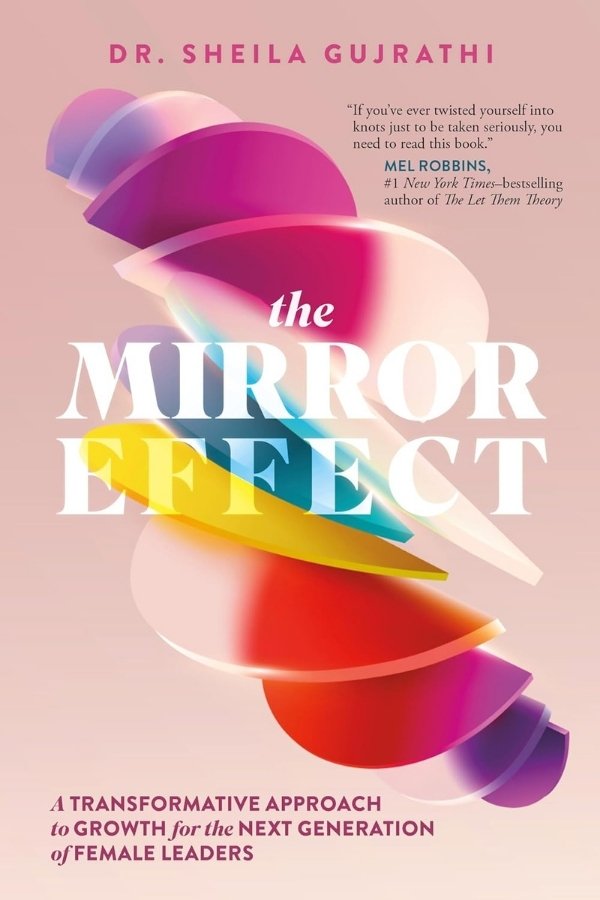 Absolutely. I am so glad you brought that up. I shared a lot of stories of women leaders, but I was always thinking about a broader inclusive audience because many of us have these insecurities. It is not specific to any gender or any nationality, race or upbringing. It also depends on who we are as individuals. Some people are extremely confident. Some people have some insecurity, some people go through different life experiences for whatever reason.
I have had a number of men read this book and share with me how much it helped them. The publishers always want you to target a demographic audience to have some clarity. It is very helpful for women leaders, but definitely beyond. I also have a number of men who are reading it to help them raise awareness of what their loved ones in their lives are experiencing.
That could be their partners or daughters or sisters. Again, try to understand how to be effective and helpful. I have a lot of girl-dads who reach out to me. I am so thrilled to have these discussions proactively with their daughters. I had some men go through a book club with their daughters and do this book and the workbook. I have a companion workbook and journal. They wanted it to be practical.
I want us to get out of our heads onto paper and try to break free from these limiting thought patterns and beliefs and step into our power in meaningful ways. Again, understand proactively how to assess our environments and deal with them so that we are always coming from this place of strength. They even go through these exercises with their daughters and read together. That is so special.
That is a mic-drop moment right there because I love it. There is something about bringing people together, especially families. Having conversations like this sometimes can be hard, and giving them a tool that allows them to have a meaningful conversation to get to come to terms with some of the biggest challenges that women face. Being an ally can be challenging too in their own way, not knowing how to support people.
That is exactly right. I have had people say, "How can I help?" They want to help. We all are all aware of the statistics. Still less than 10% of Fortune 500 and Fortune 100 companies are led by women CEOs. We all know the entry levels, the graduating classes in many graduate study programs, probably all of them at this point, are 50% women. That is true for medical school, I can say.
You get this attrition that occurs with these higher echelons of leadership. By the time there is that C-level, the CEO role, and then the board director levels, you are talking about less than 10% ranges at this point still. We all understand that this is something that we need to deal with. It is not because women are not leaning in and do not want to play these roles. There’s a lot that is happening along that journey where people are dropping out or not getting these roles. It is worse now because of the geopolitical climate.
It’s unfortunate that this is the situation. I felt like we were slowly making steps, but then we added a few steps back. My hope is we somehow come out of this period and we start to make more progress. The key thing is it’s going to require different people to speak up. What I mean by that is it is not going to come from the government. It is going to come from the organizations themselves saying, “Enough is enough. We cannot do this. We are not making progress from an innovation perspective. We have poor leadership. We keep on making the same mistakes. We need different people in the seats.”
We also know the research where diversity drives innovation and better outcomes. We’re so proud of the Sisterhood to talk about the successful women who led multi-billion dollar exits and financings, are so successful, amazing leaders and so incredibly effective. We highlight those stories now. We are organized in a way where we can highlight those, bring attention to those and amplify the work that we are doing individually and collectively. That is true, back to your point about what we can do as allies and that allyship. All of this is meant to be very inclusive, raise awareness and brainstorm together like how we address this together.

Allyship, Equality, And Creating Change Together
You pretty much answered the question I was going to ask you next which is, what do you most want? If you were to wave the magic wand, what would you like to see happen in the next few years? It sounds like you want us to work together and create a path from the ground up. Maybe you want to give me some different answers as to what your magic wand moment is.
I do think it is an organic, grassroots, inclusive effort with all of us participating in whatever way we can. I do believe in having that big vision, goal, and intention. My ultimate vision and goal personally and at the Sisterhood is that equality is like 50% women in all these different roles. Why not? When we run our companies like when I was the CEO of Gossamer, that is what it was at every level. It was 50% of women and men from all different backgrounds.
It gets to the point where you don’t even pay attention to that because you are surrounded by this incredible diversity. Many companies are like that now. That is wonderful. We know that can work. There are examples of that. We also have companies who look around and there is no diversity. It’s still existing as well. That is the goal. From my perspective, let us take the steps to get there. I was talking to some sisters, and we were saying this year could be the year of impact. All of us can be mirrors for others.
All of us can take steps now to help others around us. Say encouraging words to the women and people with different backgrounds in our lives. Make useful connections. Sponsor people. Mentor them. There are so many ways that we can take action to help make those differences and those changes. If all of us are doing that together, change is going to occur. It comes from this place of raised awareness, understanding, and appreciation. Also this desire to do this together. That is so exciting.
All of us can take steps today to help others around us.
The keyword is together. Also, it is not like you are saying that men are bad or these other people are bad. It is more about, how do we do this not at the expense of someone else but raising all of us together? Which is so important. Seeing it as 50/50 is a great target to reach for. It is not acceptable for us to continue with this skewed perspective, and that is not healthy. Some of the pushback, as I’ve seen it and maybe this is a little rant of my own. There are a lot of people who fight against these moves and are feeling like, "It is going to affect me. I am not going to get what I want because they want what they want."
It is coming from this lack of mindset. It is very competitive and pitting people against people. I grew up with that. It was like "There is only one room for a woman at that table." I have to fight with the other women to get that seat, or against other people of color or other South Asians. We talk about that amongst our groups. This is how we were raised. We thought there was this real scarcity. We would have to compete against one another. How sad is that? Instead of helping and lifting each other while we are climbing, we are actively competing with each other and kicking each other off the mountain. That is what is happening, and it is terrible.
No doubt.
Now I’m saying no. There is an abundance. We could all be successful together. No blame, no shame. We are coming from all these different reasons. All of us are sometimes silently suffering. I always say whatever is going on in here is in our minds. It’s what we are acting out externally. There are reasons why people act the way they do. I talk about that to have compassion for ourselves and others in our lives to come at it from that place. Also, these things are not acceptable, and they should not be tolerated.
We could all be successful together. No blame, no shame.
If you are suffering from microaggressions and these things, that is not acceptable. It is not normal. It is not something that we should tolerate. I say that from someone who has tolerated it most of my career and continues to in some ways. Now I can speak up and say, "That's not acceptable behavior for me or members of my team or the company or the culture." Speak up and say that and come from that place knowing that is going to help everyone involved. I do agree. It is coming from this sphere of like, how can we all win and thinking about what will occur at my expense?
Books, Wisdom, And Closing Reflections
We have covered so much ground. I am so grateful that we did this. These are important things to cover. I am so glad that you were able to join me and talk about these. I do have one last question for you. My last question is one that I am always interested in hearing. What are one or two books that have had an impact on you and why?
As you can probably tell from the answers to your questions and my background, I do have a strong spiritual foundation and influences in my life. I believe that we are all here to continue to grow professionally and personally and everything in our lives is a means of growth. Two books I love to recommend that helped me so much on my journey and that were so eye-opening is The Untethered Soul by Michael Singer.
 It’s a beautiful book. It’s written so clearly. It captures so much of some of the spiritual insights I have had in my life. I love that book. I also love a lot of the writings of Thich Nhat Hanh, who unfortunately passed away, but was a wonderful Buddhist teacher and an extraordinary human being. Those are some of my top picks. Anything by Thich Nhat Hanh is amazing and also practical like meditation and breathing techniques and walking meditations. All these things I have used to help me in my life.
I thought you were going to be sharing some science textbooks like Gray's Anatomy or something like that.
That is for sleeping aids.
I love it. Thank you so much for sharing those. The Untethered Soul has been mentioned here a billion times and it is for a good reason. It is a wonderful book. Sheila, this has been such a pleasure. Thank you so much for bringing your heart into this space and your stories. Thank you so much for coming and joining us.
Where To Find Sheila And A Final Thank You
Thank you so much for having me. I enjoyed being here.
Likewise. Before I let you go, I would love to be able to share with the audience where they can find out more about you.
I have a website, SheilaGujrathiMD.com. I also have a presence on LinkedIn, Instagram, and Facebook. I love to post every week about different topics that I hope will be helpful for others. I also have a monthly newsletter. I would love for you to subscribe to that newsletter. Again, wanting to focus on things that could be helpful, things that are a pertinent lesson learned that I had even recently that I will talk about, and obviously parts of my book that I am sharing more proactively. The book is available on Amazon, Barnes and Noble, in many airports like the Hudson News. Please feel free to reach out and connect with me in any of those venues.
Thank you again, and thanks to our audience for coming on the journey. I know you're completely inspired and ready to be a mirror for other people and allow them to see what's possible through your own actions and your own behaviors. Thank you.
Important Links
- Sheila Gujrathi
- Sheila Gujrathi on LinkedIn
- Sheila Gujrathi on Instagram
- Sheila Gujrathi on Facebook
- Biotech CEO Sisterhood
- Angie You on LinkedIn
- Julia Owens on LinkedIn
- The Mirror Effect
- The Untethered Soul
- Gray's Anatomy
- Genentech
- Gossamer Bio
Love the show? Subscribe, rate, review, and share! https://www.ipurposepartners.com/podcast

0 comments
Leave a comment
Please log in or register to post a comment