
Trusting Your Inner Voice For Ultimate Career And Workplace Success With Mary Olson-Menzel
Reigniting your spark for ultimate career and workplace success requires a deep dive into your personal 'flashpoints' and trusting your inner voice. Executive Leadership Coach Mary Olson-Menzel, a Marshall Goldsmith 100 coach and national bestselling author of What Lights You Up?, shares her incredibly inspiring journey of major life pivots—from her father's influence and her early career shift from television to tech recruiting, to the personal crucible moments that ultimately led to the birth of her coaching firm, MVP Exec, in 2012. She introduces you to actionable concepts like the "light log" and the essential role of intuition and reflection for finding deep contentment and designing a more generative and fulfilling professional life.
---
Listen to the podcast here
Trusting Your Inner Voice For Ultimate Career And Workplace Success With Mary Olson-Menzel
It is truly a pleasure to introduce you to my guest, Mary Olson-Menzel. Mary is a renowned expert in career and workplace success. She has 30-plus years of global leadership experience across various industries, including media, tech, healthcare, and sports. As an executive leadership coach, Mary works with both companies and individuals to unlock their potential, improving business performance and catalyzing growth.
Her methods bring a fresh perspective to business, nurturing teamwork, and driving results and success. Her innate curiosity and ability to connect with people paved the way for her life's work, helping leaders at all levels channel what lights them up and inspire them to follow more fulfilling and successful personal and professional journeys.
She is an inspiring speaker who customizes and creates actionable takeaways for every audience. She's also part of Marshall Goldsmith's 100 Coaches and is a regular guest lecturer on career development, internships, and workplace success at NYU and Northwestern University. Her award-winning book, What Lights You Up?: Illuminate Your Path and Take the Next Big Step in Your Career, is a national bestseller. It is worth checking out.
‐‐‐
Welcome to the show.
It's so great to be here.
Likewise. I'm so thrilled to have you. The language you use resonates with me. I talk about illumination, inspiration, and lighting up. You and I are kindred spirits. I'm looking forward to getting into our conversation.
We're here at the campfire chat, so we're going to spark lots of ideas.
I love it. As we often do here, we explore people's journeys through what I call flashpoints. There are points in our journey that have ignited our gifts into the world. That's what we're going to get into. I'm looking forward to learning more about what got you to where you're making such a big impact in the world. In a moment, I'll turn over to you to share some of those flashpoints. You can start wherever you like. We'll pause and see what themes are showing up along the way. How does that sound?
That sounds great.
Why Curiosity Led To A Pivot From The Family Business
Take it away. Why don't you start with your first flashpoint?
My first flash point was around age ten, believe it or not. This is in my book, What Lights You Up? My dad had a poignant story. He was an ad man. Think Mad Men days. He was brilliant. He loved it. He was super creative. Then, he was asked by his dad to take over the family business. That created a marked difference in our household. He went from doing something he loved to doing something that he felt responsible for doing for the family.
 I didn't know what it was at the time, but I felt the energy shift in our house. He went from coming home excited and drinking a martini with my mom back in the day to coming home exhausted. We had many conversations throughout the years as I was growing up about work, what that means to people, and all of those things, so I would say he was my first teacher and coach.
When I looked down the path of taking over the family business, I went the opposite direction. I went to where my spark and my curiosity were, which was into television. I wanted to know the story. I wanted to know what happened, what made people tick, and what motivated people to do what they did. TV felt like a very natural next step for me, which was great.
I loved it, but I was going from small market to small market, reporting the news. I was a field reporter at the time. I was teaching aerobics, working at the Clinique counter at Lord & Taylor, and barely made enough money to pay my rent. At that point, I decided that, at the tender age of 23, I would make my first pivot. I didn't decide. It fell into my lap.
I knew that I needed something a little bit more and a little bit different. I needed to pay the bills and keep the lights on in my house. I went to an interview at a recruiting firm for a specific job that they had listed, and they ended up hiring me. That's where my curiosity about people, what motivates people, and what makes them tick went into a different direction. They trained me to be a recruiter.
I love that you share this because there's something about how the fundamentals are the same. There's an element of being in TV and media where you still have to have an interest in people. It's curiosity. There are the fundamental elements. You're shifting and using those same elements in this new pivot in a different direction, but in a very different field. It's not like you're completely a fish out of water, but you're using them in different fields.
I made a lot more money, which was helpful.
When I heard you talking about all those different jobs, I was like, “I'd be exhausted.” Also, at the same time, there are so many great learnings from having all those different jobs and learning skills from being at the Clinique counter and being in these places. I often joke about that. My wife and I were talking about how, along the way, there are certain fundamental skills that you need to learn. Sales and being a server, a waitress, or a waiter, those things are so great to learn because, at the end of the day, they make you so well-rounded.
You're so right.
From Reporter To Recruiter: How To Use Core Skills In A New Field
What happens next? Here you are, making this change to be in the recruiting field. How did that work out for you?
It worked out great because we're sitting here. It was the launch pad for what was next for me for the rest of my career. I went from this recruiting firm, and they taught me how to be a tech recruiter. I was working in tech at a time when tech was taking off. It was the first tech bubble that many of us had in our lives. With that, I loved recruiting. It was so much fun. I got to learn about people, but I also got to help people. That, to me, was the secret sauce. It was learning what makes people tick, but also helping them find happiness and joy in a job.

That then led to a client from that recruiting firm who recruited me to become a recruiter at this tech firm. I helped build this tech firm from when they started with about 250 people to about 5,000. It was a big growth spurt for them. They were a great firm with a great culture. I was lucky enough to be able to start to grow as a professional. I started taking on leadership roles and things like that, but all still in the recruiting space. It was delightful until I got recruited by a major media company in my hometown of Chicago. That, to me, felt like a full-circle moment because I was able to take the skills that I'd built over a ten-year period and do it in the media space, which is where my heart was in the first place as a television reporter.
That is so cool. I love the idea that when the dots start connecting, you don't have to force them. It starts to come into place. Sometimes, you get frustrated. You're like, “Why am I not doing the thing that I set out to do?” You have to sometimes allow the detours of sorts to allow you to expand your capacity and expand your breadth. It somehow leads its way back. It reminds me of this thing that I often use in my coaching, which is to expand your vision, narrow your focus. In general, this expansiveness and narrowing is allowing you to see more possibilities and then also focus, so you can execute on things.
I love that idea of expanding your vision and narrowing your focus. That creates clarity because then, you can see the whole playing field, and then you realize what position you want to play in. That was interesting, too. A key learning or something to point out to your audience is that these opportunities, as I talk about them, seem to have fallen into my lap, but if I weren't open to the opportunity, I would not have seen them or been able to say yes. It's also important to keep your eyes and ears open for the opportunities that maybe could surprise you for your next step.
Expanding your vision and narrowing your focus create clarity.
Trusting Your Intuition: Determining If Your Next Career Move Is Right
Since you're skilled at this, I'm going to ask. How does one determine if the next step is the right step for them, especially if it's something that is considered maybe a little bit different than what's expected? Is that question clear?
Yes, it’s a clear question. The answer might not be as clear because it's very personal.
Go ahead.
Back then, I was doing pros and cons and listing them out on a sheet of paper. If the pros outweighed the cons and the pay was more, that was how I was making those decisions at a very young age. Now, with the wisdom of experience and the wisdom of, “That pivot meant this,” I would say to truly follow your intuition. Follow your heart. You have to make money. You have different life circumstances at different times. What lights you up? The perfect job for you might be different at different stages in your career.
You and I talked about having high schoolers. When my kids were little, I needed more flexibility in my career and my job. Now that I have college graduates and high schoolers, it's a different story. I can focus more on the work, and I don't need as much flexibility as I used to. It's a very personal journey that you have to go on, knowing what's important for you when you say yes to the next job.
It's almost like not just the context matters, but it's like, “What does this next thing give me that I'm seeking next and where I am?” It’s like, “I'm seeking more flexibility. This job not only is allowing me to grow, but it also gives me the flexibility that I need at this stage,” or, “I'm looking for a role that's going to allow me to mix the extra money I need to be able to afford the lifestyle that I'm living into, whatever that might be.” There are a lot of decisions that you're leaning into. I also want to hit on that word you used. Intuition. I love intuition, but there is also an element of intuition that comes from experience. Intuition is informed by experience. That is a very valuable aspect of this. It's not blindly saying, “I'm going to haphazardly choose.” Intuition is informed.
You're right. Our kids are more taught this, but as kids, we were not taught to tap into our intuition. We were taught to look at the facts and make decisions based on facts. Thus, the pro and con list and things like that. The older we get and the more seasoned we get, the more we know that our inner voice will never steer us wrong.
You have different life circumstances at different times. What lights up the perfect job for you might be different at different stages in your career.
As you get older, you get even more trusting of that because experience has allowed you to say, “I've done this before. I've seen this happen before. I know where this is coming from.” The world also makes it more complex for us to be able to say, “Maybe not. Maybe this isn't quite what I had seen before. Maybe it's different this time.”
We were talking about this before we started. The world is complex. There's a lot of chaos and a lot of noise out there. It's up to all of us to be quiet for a minute so that we can listen to that inner voice, whether that's meditation, prayer, workouts, or whatever it is that allows you to tap into that inner voice and your heart's desire. You have to quiet the noise in order to be able to hear your own inner voice.
Use The "Light Log" To Find What Truly Lights You Up
I can't wait to dive into your book. Even the title alone says so much. When I say, “What lights you up?” Sometimes, people don't even know what truly lights them up because they spend so much time on autopilot and doing and executing. Maybe I'm saying this because this is how I was for a period of time in my work life. You get so stuck in the rut or the pattern that you lose sight of, “What does light me up?” This is not a question, but what's your reaction to that?
You're right. I love it. It's a question that my clients come to me with. What we do at MVP Exec is executive coaching, leadership work, and workshops. We do all kinds of things around leadership. My book is based on career coaching and leadership as well, because you have to be able to be a leader, whether you're a leader of people or not in an organization.
It's interesting because when people come to me for the What Lights You Up? pivot program, sometimes, they're lost. They can't see the forest through the trees. They're so mired and heavily weighed down with the responsibilities of their day-to-day job and their day-to-day life that they've forgotten what lights them up. It's up to me to help them uncover that. It's in them. I just get to guide them in the right direction to help them figure that out.
One of the things that I do, especially with my very logical clients, such as my bankers, finance people, and things like that, is I say, “If you can't figure out what it is that is lighting you up right now, start to keep what I call a light log.” That light log is day-to-day. You can put it on your phone. You can write it down in a notebook.
Do whatever you want to do, but jot it down somewhere. Then, look for the patterns of the periods in your day where you feel in the flow. Look for the patterns for those periods of the day when you feel happy. Keep a running list of that and see how that looks at the end of a month or a couple of months. That gives you a great idea.
I had a guy. He was a lawyer. He said, “I don't know.” After a couple of weeks, he comes in and goes, “I love making my morning coffee. It's like a ritual to me.” We didn't end up pivoting him into Starbucks or anything like that. There was another story of a woman who said, “I don't know. Nothing in my job is lighting me up right now.” I said, “What is it that is lighting you up? Where are your passions?”

I have an exercise in the book that's called The Three Ps, where we look at an aspirational list of organizations that you could work for. It falls into the three categories of your usual Prospects. For you and me, that would be more coaching in a different firm or something like that. Pivots. How do we take our existing skill sets and pivot them into a new industry? Then, the Passions.
For this woman, her passion was horses. She was an avid equestrian. She loved being around horses. She said, “I can't do anything in that world.” I said, “Why not? Why can't you do anything in that world?” She said, “I would have to move to Florida or something.” She was in New York. I said, “Let's take a look and explore. Let's list a bunch of companies that are equine-related in this metro area.” She ended up taking a job in a place that was related to horses. She was the head of media and marketing for Saratoga Race Course. It was awesome.
There are horses in Central Park.
I hope they're treating those horses okay. That's what I hope.
I love that. It’s so spot on. What I would also add is if you're feeling like you don't know what that is through the Three Ps, get out and explore. Have more conversations with people. Coming back to your light log, which I love the terminology, we need to have more reflection, like, “What happened that I liked or enjoyed? What brought me something that I enjoyed?” Something like that allows us to know that we're not going through life just to make the paycheck or to get through it. We want to make sure that we're enjoying some aspect of our existence. What is life for?
I love that you use the word reflection. There was an article. I believe, don't quote me, it might've been in the New York Times about the lack of reflection time that people have after 2020 because of our back-to-back Zoom and things like that. It’s digital everything. Even during our downtime, people are scrolling. People are on TikTok. People are doing things differently, rather than reflecting and going for a walk, reading a book, or sitting by the water and thinking. This is another thing we do with executives. We build in reflection time in their week so that they can have that thought leadership. I think it’s important. We all need to make time for it.

An interesting way to think about that is if they have a hard time with reflection, have them book some time with you or me, and we can sit there and give them a space to reflect. That’s probably a lot of money to spend on being by themselves, but that gives them an excuse to be in reflection.
I’m guessing you, as I do, have exercises that we take them through to allow them to take that deeper work and reflect on it.
Crucible Moments, Purpose, And The Birth Of MVP Exec
I love that. Sometimes, little things, like even adding some music into a session or giving people a creative prompt, allow them to get out of their minds a little bit. It allows them to get out of their normal thinking and into their body, and allows them to explore something deeper. I love that. Let's get back to your story. Is there another flashpoint you want to share? Maybe writing your book was one of the flashpoints, but is there something that you'd like to share that you haven't shared yet?
Another flashpoint was when I left Corporate America. I was at this media company, Tribune Company, in Chicago. It was my favorite place to work ever, other than what I'm doing now. I was there for ten years. I did various roles and had all kinds of different pivots within the organization that helped me grow. The organization was going through massive change, and simultaneously, for family reasons, I had to move from Chicago to New York. That was a tough one because I left a job I love. I left my family in Chicago, and I made the move for my husband's family, and we rerouted in New York.
I went and worked for a couple of different firms. They were all great and fine, but they were not lighting me up. That was another a-ha moment. I'll get personal again, if you're okay with that. Same situation. My dad was killed in a car accident. Literally and figuratively, that rocked my world and gave me pause. My son at the time, the one who is now in high school, was five months old. Shortly thereafter, I was diagnosed with breast cancer.
There were all these things happening that were taking me off my alignment and causing me to be quite wobbly. That was a moment in time that was the birth of MVP. I realized that life is so precious and that it's too short to do something that you don't want to be doing. I started MVP in 2012. That felt like jumping off a cliff into a very small net. I did have the net of my husband, so thank you, Dan. It truly felt like jumping off a cliff. I did it, and then I never looked back. It has been the best. Have there been hard times? Different economic things affect our client base, and all of that, but it has been great because I get to help people for a living.
Life is so precious and too short to do something you don't want to be doing.
I wanted to reflect this back to you because there's something powerful. The whole idea of a flashpoint is that sometimes, it can be a slow burn, or it can be a bright and quick burn. This flashpoint moment for you was almost a point where you said, “I need to do something with this momentum that I've created. All these crucible moments that have ignited me have created a purposeful moment that I need to turn into a force of good.”
“Even if I don't know all the answers and even if I don't know how this all manifests, I know that I want to create a momentum from this that will serve others.” I think that's something that's amazing. Even if you're struggling with all the things that are happening, you can flip it around and say, “Now it's time for me to serve from this place.”
That satisfaction of helping others and serving others can help fill you up, too. That is a beautiful thing. That's what makes the world go round. We help each other and pay it forward. That gives us joy, and then the joy becomes a ripple effect on other people. It's a beautiful thing when we can do that.
I use the word purposeful because some people get into business to make money. We all need to make money, don't get me wrong, but you're doing it for a real reason. You want to help people, and you want to use what you've created or what you've experienced throughout your journey to move others in the right direction. You know that their lives should have a light and should have a way forward that allows them to live their most meaningful life from here.
That's what drives me. It is helping other people see their light and helping people find that deep contentment in their lives and in their careers.
Leading Through Chaos: Pivoting The Business In A Post-2020 World
Starting your own company is not an easy thing. The roller coaster ride continues, and it always has new turns and twists along the way. Tell me what the most challenging part was as you got through the years of building this business that you experienced, and you were like, “Wait. Is this happening?”
There was another pivot that happened. Talk to me about my pivots. Every couple of years, I'm pivoting to something else. When I feel the momentum, and I tap into my inner voice, I pay attention to it. The jarring one for all of us was 2020. What was happening? MVP was robust. We had almost twenty people in the organization, with some freelancers and things like that as well. Part of my business was retained executive search, executive coaching, leadership, and career coaching.
2020 happens, and recruiting comes to a screeching halt. Companies put all their hiring on hold. I've got a bunch of recruiters sitting around, wondering what they can be doing, and I have a team of coaches. I had been thinking for a couple of years that recruiting is great, and it was such a big part of my life for so long, but it wasn't lighting me up anymore. It wasn't the piece that was giving me joy. It was something that became more rote.
I had this beautiful team of recruiters, and I had a recruiting manager who ran the whole thing so that I could focus on the coaching. I had to make a big decision. After we all started coming up for air, literally and figuratively, I did some deep soul searching. I said to my recruiters, “This is the year I'm going to phase out recruiting. I'm going to give you all a year to find a job.” They all found jobs within months. They're so good and so talented that they were like, “Done.” As a humane leader, I was like, “We've been through the gauntlet together, and I love you, guys. Let's take this time and figure out what you want to do next, and off we go.”
I cut the size of my business in half and phased out recruiting in 2021. Believe it or not, the coaching started growing and building. Even in 2020, we quadrupled in demand because everybody needed to know how to lead through crisis, remote work, hybrid work, and all of that. That was another big moment where I had to dig deep inside. My son pointed it out to me at the tender age of ten at the time. He said, “Mom, you talk to your clients about being lit up. You look tired.” I was like, “You are so right.” I could have moved on from that, but those kids are mirrors to our lives. We have to pay attention to what they're observing at times.
Those kids are mirrors to our lives, and we have to pay attention to what they're observing.
That's so true. I love that you say this because there's something about how it's not just for our clients and for us personally, but it's also what our business needs to be lit up. Sometimes, that requires us to take a moment, step back, and say, “Maybe it's time for a pivot of sorts and give new light to our organization.” That might mean taking some slightly different directions, and that's okay.
It's not a defeat. It's more of re-energizing and giving birth to something else. It embodies all the messaging that you've shared already, which is that we don't necessarily have to be constantly beating the same thing. What patterns are you in that need to be broken or interrupted so you can create a new path that is going to be more regenerative and more fulfilling?
Also, it is paying attention to what's happening in the world and paying attention to what's happening in the industry that you're working in. You have to shift, pivot, adjust, and take some twists and turns based on what's happening in the business world around you or the organization that you're working in.
An Actionable Guide: Inside The National Bestseller What Lights You Up
We've covered a lot of ground. We could talk for hours. I love your style. I love your approach. I want to go back to the book for a moment and say, is there anything you haven't shared about the book that you want to mention? I'm sure there's a lot in the book, but do you want to leave any nuggets from the book that will get people wanting to go check it out?
Yes. I'm quoting my stepdaughter, Sam. She said that my book is my love letter to the world. I wrote this book for everyone. I did not want to make it focused on one type of person. I took the lessons from the methodology that I created years ago, and I created something that a college kid graduating from college could handle, do the exercises, and find a job.
This could be for a mid-level manager, a parent going back to work, or a CEO who's looking at, “What's my last gig before retirement?” or, “What is retirement? How do I plan for my retirement?” It's a book that is for almost anyone who is at a crossroads in their career. It goes very deep into actionable exercises and actionable direction. It's almost like this little handbook that people can take along with them, do the exercises, and then get greater clarity with every chapter as they go.
I love that you share it like that because there's something about books that allows you to put them into action as opposed to saying, “That was nice,” and then maybe a few quotables, and that's it. When you've got a journey you're going on, and it allows you to take the book and put it into action, that's a whole different ballgame. More people want that.
Wiley, my publisher, helped me with this. They wanted the book to be a little bit longer than the one I had originally written, so I took it to the next level. This is what I think makes it such a great book. I take you all the way through the stages to getting the job and negotiating the offer, but then what? How do you do great onboarding? How do you become a leader in a space, even if you're not a leader of people? How do you design your career once you've landed that job for success? At the end, it becomes a leadership book. We talk about gratitude, paying it forward, and all that good stuff at the end.
That’s wonderful. I love it. What a message to be sharing here, especially timing-wise. We're having this conversation near the end of the year. People will be reading this at the beginning of 2026. For that purpose, people are in that energy mode of like, “What's my next move? What is going to be the thing that's going to light me up?” I hope that people are reading this and saying, “It's time for some fresh energy. What do I need to do to get into the right rhythm for what I'm looking for next?”
It comes out in paperback on January 13th, 2026. You can get it in hardcover or paperback.
Mary Olson-Menzel's Top Book Recommendations For Career & Life Success
That’s wonderful. I love it. Speaking of books, I've got one last question for you. This is the question that I love asking because it gives people a little sense as to how Mary thinks or what brought Mary to this world in the way she is. What are 1, 2, or 3 books that have had an impact on you, and why?
There are so many. I'm going to give a shout-out to the Marshall Goldsmith 100 Coaches. There are a gazillion great books written by my colleagues over there and so many to talk about, but I'm going to go in a different direction. I shared with you about my dad and what an influence he was on me. As I was grieving his passing, a book by a woman named Laura Munson came out. It was called This Is Not the Story You Think It Is. It was all about a woman going through the loss of her father and what happened in the year following. I'll leave you with that.
Laura is a brilliant New York Times best-selling author who has become a friend, which is great. She's written many books. The last one she wrote was The Wild Why. It is all about re-finding wonder in your life. Another one that is an inspiring and quick read is a book by another dear friend, Victoria Labalme. It's called Risk Forward. I love it because it's like a companion book to what lights you up, making your way through the fog, and trying to figure out what's next. One of my favorite quotes of hers is, “At the edge of unknowing is the beginning of the extraordinary.”
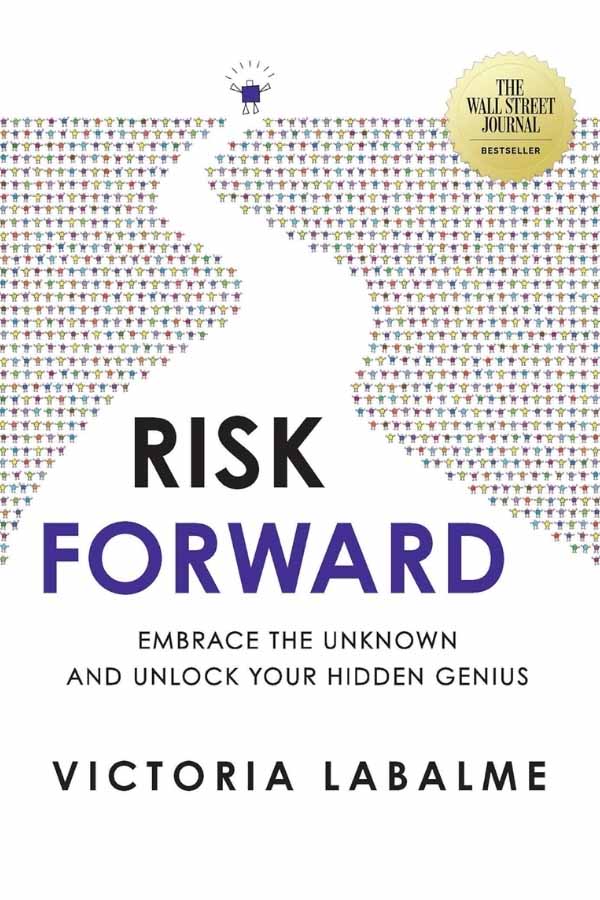 I love that. I've read that book, Risk Forward. I will say that your first recommendation is going to be living rent-free in my mind because I'm going to have to go check that out. It sounds amazing. Her name's Laura?
Laura Munson. She's not a business writer. She's a novelist. She writes fiction and nonfiction. She draws you in with her stories. It’s great. The Wild Why is great, too. It's good for those of us who need to constantly remember that we cannot get caught up in the day-to-day stuff all the time and rediscover that wonder in life.
I'm going to do one more little shout-out. The one that I'm reading right now and loving is by my friend Michelle Johnston and Marshall Goldsmith, which is The Seismic Shift in You: The Seven Necessary Shifts to Create Connection and Drive Results. That's one that came out. It’s on its way to being, hopefully, a bestseller.
I've had Michelle on my show. I've read her first book. I haven't gotten her latest book yet, but I can't wait to get my hands on that. She's wonderful. I saw she was on The Today Show or something to that effect.
She was on NBC. I got her that interview.
That's awesome.
That's my dear friends. I'm going to be on that show in January 2026 when the paperback comes out, as well as NBC News Daily.
You left some amazing breadcrumbs for us to go out and follow. I'm feeling so inspired and lit up by our conversation, so thank you so much for everything you shared.
Thank you. It was a pleasure to do this on a snowy day in New York. It warms my heart.
Likewise. Before I let you go, I want to make sure people know where they can find out more about you. What's the best place to reach out and learn more?
Find me on LinkedIn. Reference my talk or chat with Tony and me, please, because LinkedIn can get pretty cluttered. Also, MaryOlsonMenzel.com. You can download the free companion guide to the book. If you want to, it's MaryOlsonMenzel.com.
Thank you so much for that. Thanks to the readers for coming on this journey. I know you're leaving inspired, ready to have some fresh perspective on your career and on your life, and ready to reignite that spark that maybe has gone a little bit dim along the way. Let's get that fire started. Thank you again, and thanks to the readers. That's a wrap.
Important Links
- MVP Exec
- Mary Olson-Menzel
- Mary Olson-Menzel on LinkedIn
- What Lights You Up?: Illuminate Your Path and Take the Next Big Step in Your Career
- The Seismic Shift in You: The Seven Necessary Shifts to Create Connection and Drive Results
- This Is Not the Story You Think It Is
- The Wild Why
- Risk Forward
- The Seismic Shift In Leadership With Michelle Johnston
Love the show? Subscribe, rate, review, and share! https://www.ipurposepartners.com/podcast

0 comments
Leave a comment
Please log in or register to post a comment